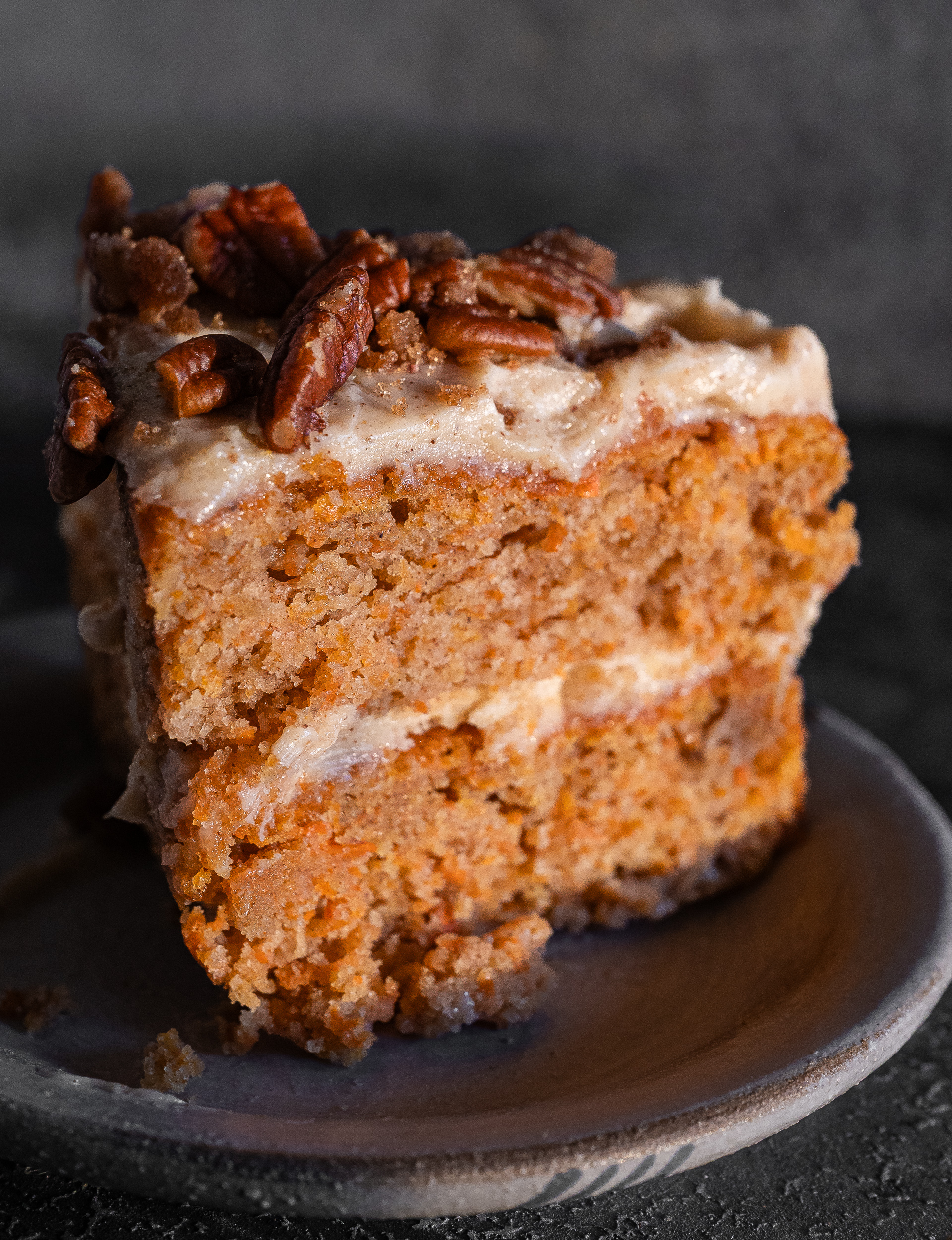
This carrot cake is what happens when classic carrot cake meets bakery-level flavor depth. It's also made the way I like to eat carrot cake where the only mix-ins are simply carrots. It’s incredibly moist thanks to an oil-based batter, warmly spiced with cinnamon and ginger, and layered with a rich yet delicate brown butter mascarpone frosting that creates a beautiful rustic naked finish. During recipe testing, I learned something important the hard way: mascarpone frosting gets sweeter as it sets. I kept adding powdered sugar thinking it needed balance… only to realize the next day it became much sweeter. So if you’re making this for guests or events, this recipe will help you avoid the same mistake and achieve that perfect cozy, not-too-sweet bakery finish.

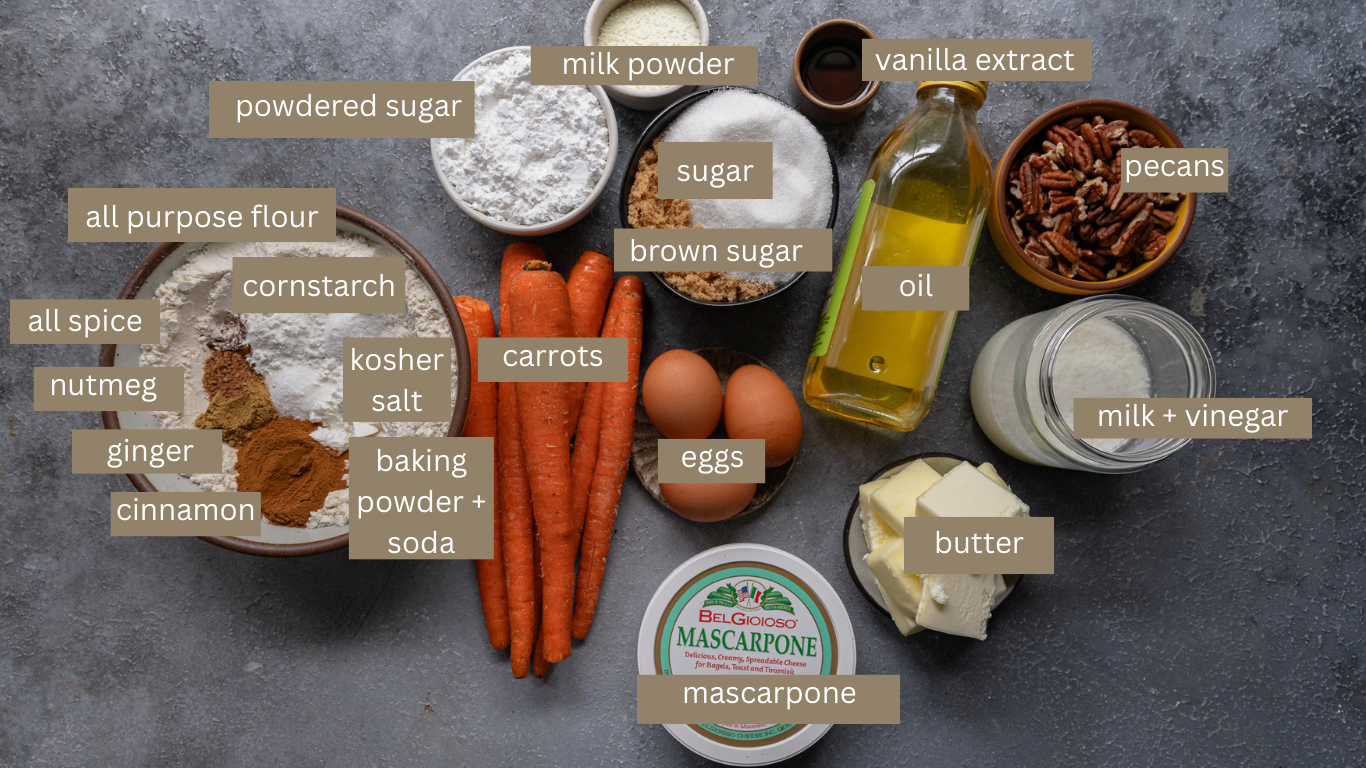
This carrot cake is built on an oil-based batter, which keeps it incredibly moist for days. Unlike butter cakes, oil coats the flour proteins more efficiently, preventing dryness and creating a tender crumb that improves overnight. The flavor depth comes from a balance of brown sugar, warm spices, and freshly shredded carrots. Using fresh carrots is essential. Pre-shredded carrots are too thick and dry, which can lead to dense or uneven texture. Start by combining milk and vinegar to create a quick homemade buttermilk. This step enhances tenderness and helps the cake rise properly. In a large bowl, whisk together oil, brown sugar, and granulated sugar until glossy. This ensures the sugar begins dissolving and creates a smoother batter structure. Add eggs one at a time, mixing well after each addition. Eggs provide structure while also contributing richness. Stir in the vanilla extract and milk/vinegar mixture. In a separate bowl, combine flour, cornstarch, baking powder, baking soda, salt, and spices. The cornstarch softens the crumb while cinnamon and ginger bring warmth and depth. Add the dry ingredients, mix with a wooden or rubber spatula until combined. Do not overmix. Finally, fold in peeled and freshly shredded carrots that have been lightly tossed in flour. This prevents them from sinking and helps distribute moisture evenly. Divide the batter evenly between two prepared cake pans and bake until set. When inserting a toothpick in the center of the cake it comes out clean with no wet batter, a few crumbs is okay. Let the cakes cool in the pan for 15 minutes. Then carefully turn the cakes one at a time onto cooling racks.


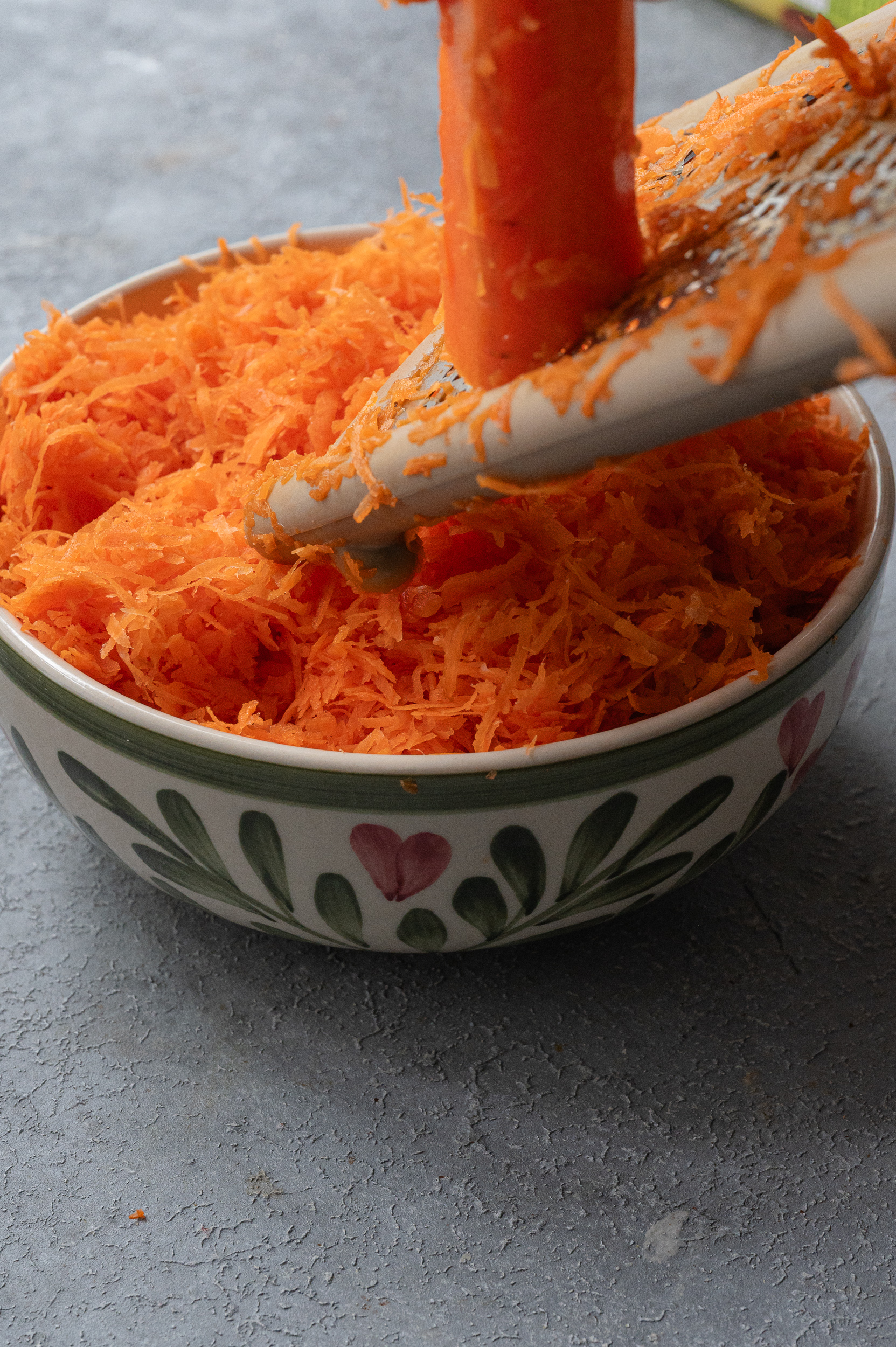
Best method to shred carrots:
• use the small holes on box grater or use a food processor
• do NOT puree
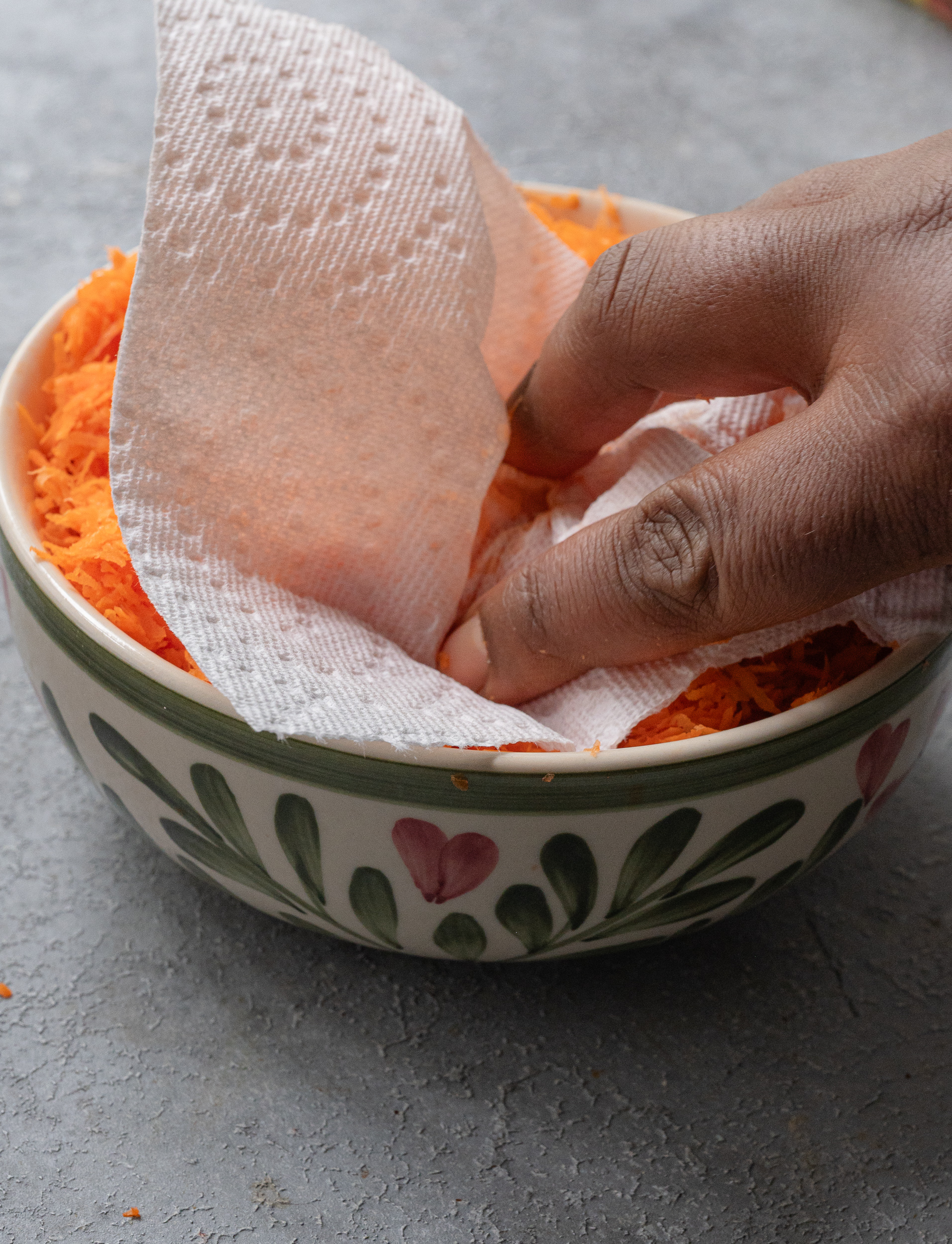
Steps to removing excess moisture after shredding:
This frosting is rich, creamy, and slightly tangy with a nutty depth from browned butter. This recipe makes enough frosting for a naked or lightly frosted two-layer cake. For a thicker fully coated finish, consider increasing the frosting by 25–50%. It is softer and more delicate than traditional cream cheese frosting, which makes proper handling important. Begin by browning the butter until golden and nutty, and pour into a bowl and immediately stir in the milk powder. Place the brown butter in the fridge and allow it to cool and solidify before using. This step is essential because warm butter can cause the mascarpone to break. Once the browned butter is chilled, break it up with a mixer until it has a spreadable consistency and beat it the powdered sugar until light and creamy. This creates the base structure of the frosting. The mascarpone should be cold but not frozen. Add it gradually and mix just until combined. Overmixing mascarpone can cause the frosting to loosen or curdle. Vanilla, salt, and a small amount of cinnamon enhance flavor without making the frosting overly sweet. It’s important to note that mascarpone frosting becomes sweeter as it rests. As you taste it and feel like it needs to be sweeter I don't recomend adding more than an additional 1/4 cup(30g) of powdered sugar.
If the frosting firms up in the refrigerator, allow it to sit at room temperature and gently rewhip with a small amount of milk or cream. It may not return to the same silky texture as when freshly made, but it will still spread beautifully. For best results, brown the butter in advance and prepare the mascarpone portion the day you frost the cake.
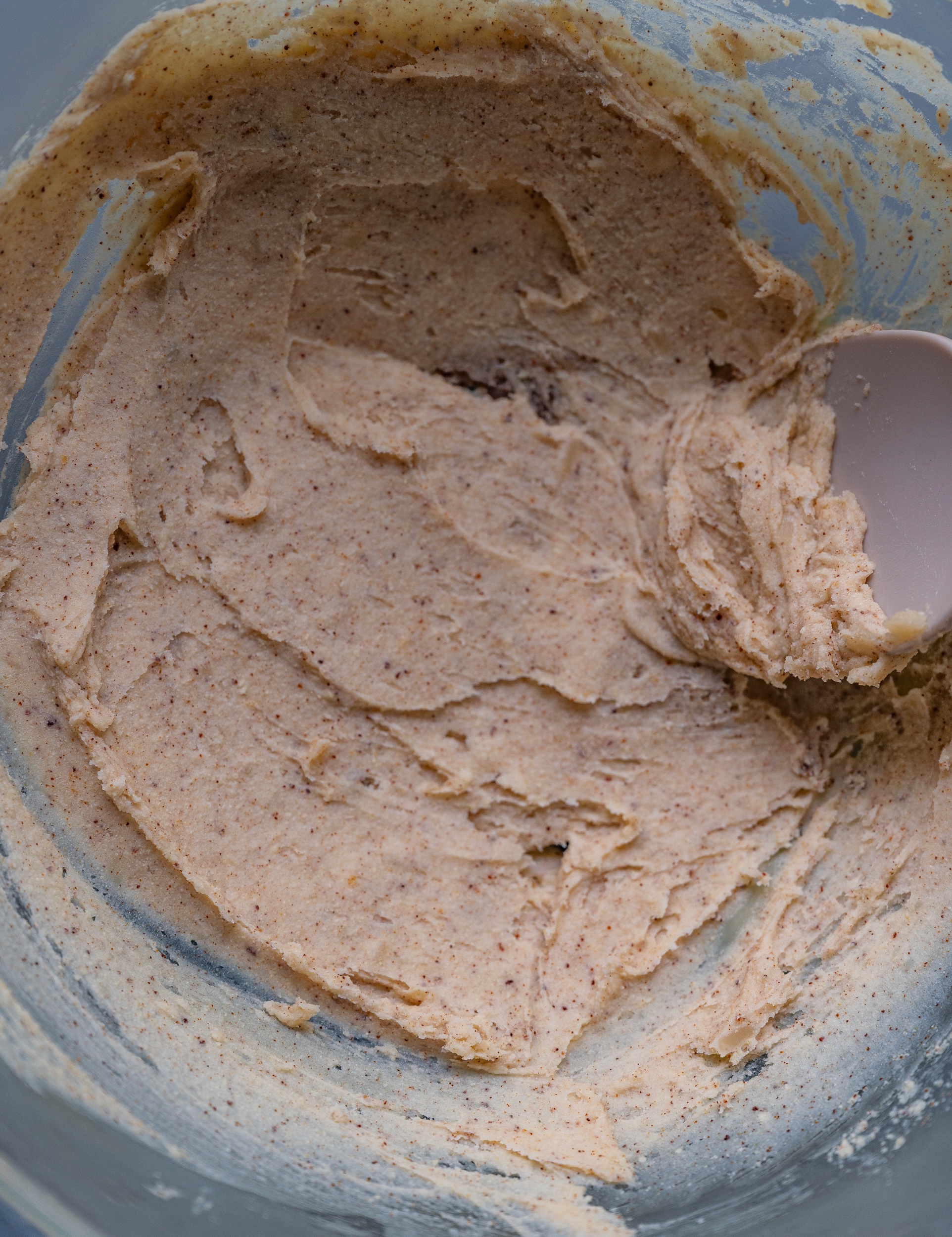

Mascarpone frosting gets sweeter as it rests.
Solution:
• stop adding sugar early
• add an additional salt + cinnamon instead, a pinch each time
It happens!
Fix it by:
It will be softer, but slightly grainier than day of which is normal for mascarpone.
Causes:
• butter too cold
• mascarpone too warm
• over mixing
Fix:
Warm bowl slightly with hands
Mix gently until smooth
These toasted pecans add texture, warmth, and a subtle caramel crunch that complements the softness of the cake and frosting. They are not glazed or fully coated pecans, they just add a nice texture to the cake. Melt butter in a skillet on low medium heat and stir in brown sugar until it begins to dissolve and bubble. Add chopped pecans along with a pinch of salt and cinnamon. Cook until the pecans are coated and fragrant. Spread them on parchment to cool completely. As they cool, the sugar will harden slightly, creating a delicate crisp coating. Then break them up in pieces, I like a mixture of sizing, from big, small and crumbles. While optional, adding these pecan topping adds a bakery-style finish and provides contrast to the creamy mascarpone frosting and a nice crunch to the cake. If you are making this cake ahead of time, I would make these and store in an air tight container once they have completely cooled and top the cake after assembling.
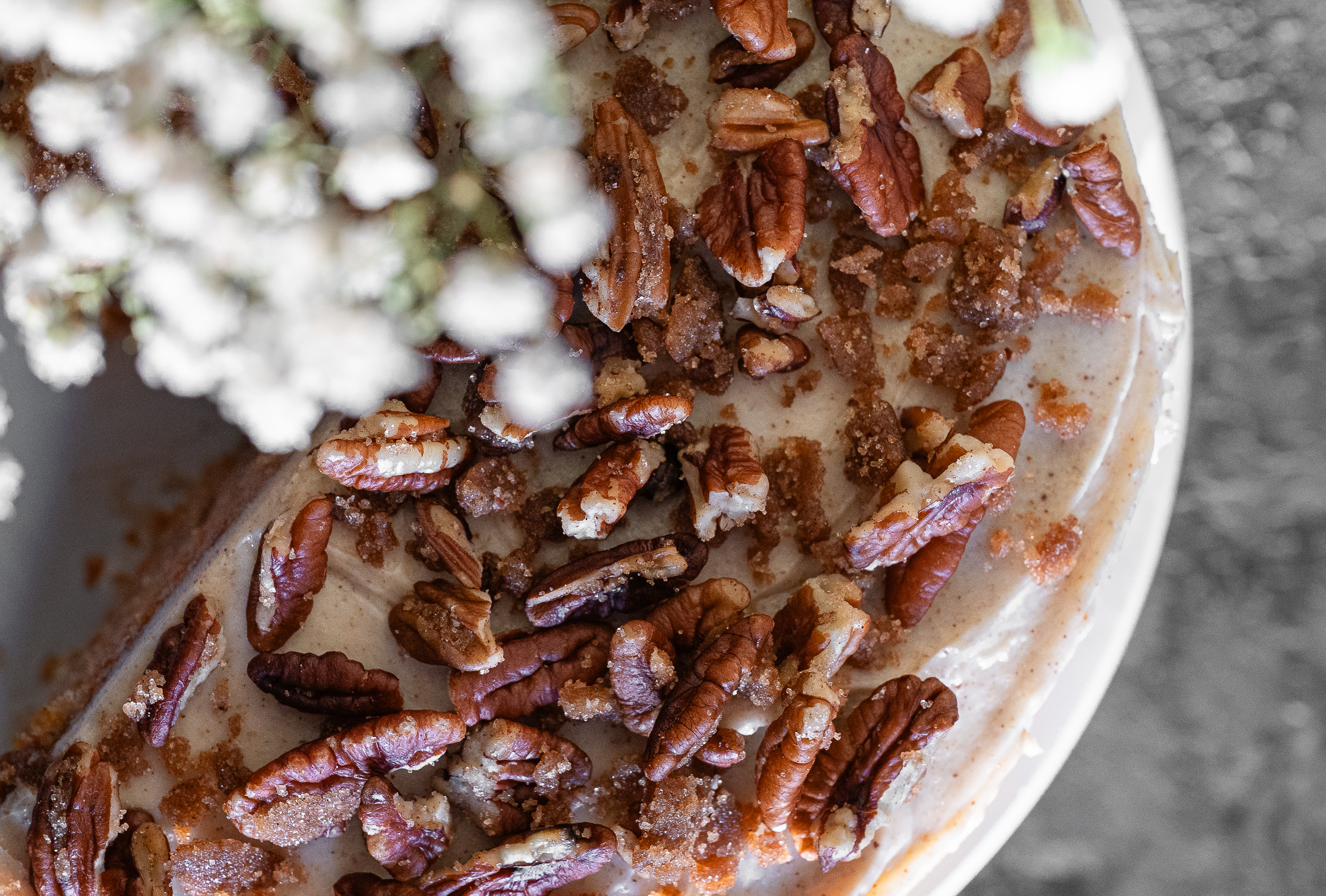
Oil, fresh carrots, and brown sugar.
Yes. Oil-based carrot cake improves overnight.
Too much carrot moisture or underbaking.
Yes, but bring to room temp before serving.
Mascarpone frostings intensify in sweetness as they rest.
Yes.
Peeling removes:
• bitterness
• thick fibrous skin
• earthy aftertaste
Pre-shredded carrots are:
• too dry
• too thick
• coated to prevent clumping
• produce dense cakes
Cake Batter
Brown Butter Mascarpone Icing
Toasted Brown Sugar Pecans
Measuring flour properly makes a big difference in how baked goods turn out. For best results, use a kitchen scale and measure in grams. This ensures consistency and prevents adding too much flour, which can make the cake dry.
If you don’t have a scale:
For the most even cake layers, it’s best to weigh the batter instead of eyeballing. This ensures even baking, flat layers and better stacking.
If you don’t have a scale, you can use a large measuring bowl with volume markings and divide the batter visually.
You want golden, not burnt. Think toasted hazelnut, not coffee ash.
I’m so grateful you’re here! Have a look around at some of my favourite recipes and stay a while.
Get a fresh delivery of only the goods delivered to your inbox.


Leave a Comment
Did you make this recipe? I'd love to hear how it turned out. Leave a comment and share your tweaks.
-- / 5 average rating from -- reviews
Lorem ipsum dolor sit amet, consectetur adipiscing elit. Suspendisse varius enim in eros elementum tristique. Duis cursus, mi quis viverra ornare, eros dolor interdum nulla, ut commodo diam libero vitae erat. Aenean faucibus nibh et justo cursus id rutrum lorem imperdiet. Nunc ut sem vitae risus tristique posuere. uis cursus, mi quis viverra ornare, eros dolor interdum nulla, ut commodo diam libero vitae era
Lorem ipsum dolor sit amet, consectetur adipiscing elit. Suspendisse varius enim in eros elementum tristique. Duis cursus, mi quis viverra ornare, eros dolor interdum nulla, ut commodo diam libero vitae erat. Aenean faucibus nibh et justo cursus id rutrum lorem imperdiet. Nunc ut sem vitae risus tristique posuere. uis cursus, mi quis viverra ornare, eros dolor interdum nulla, ut commodo diam libero vitae era