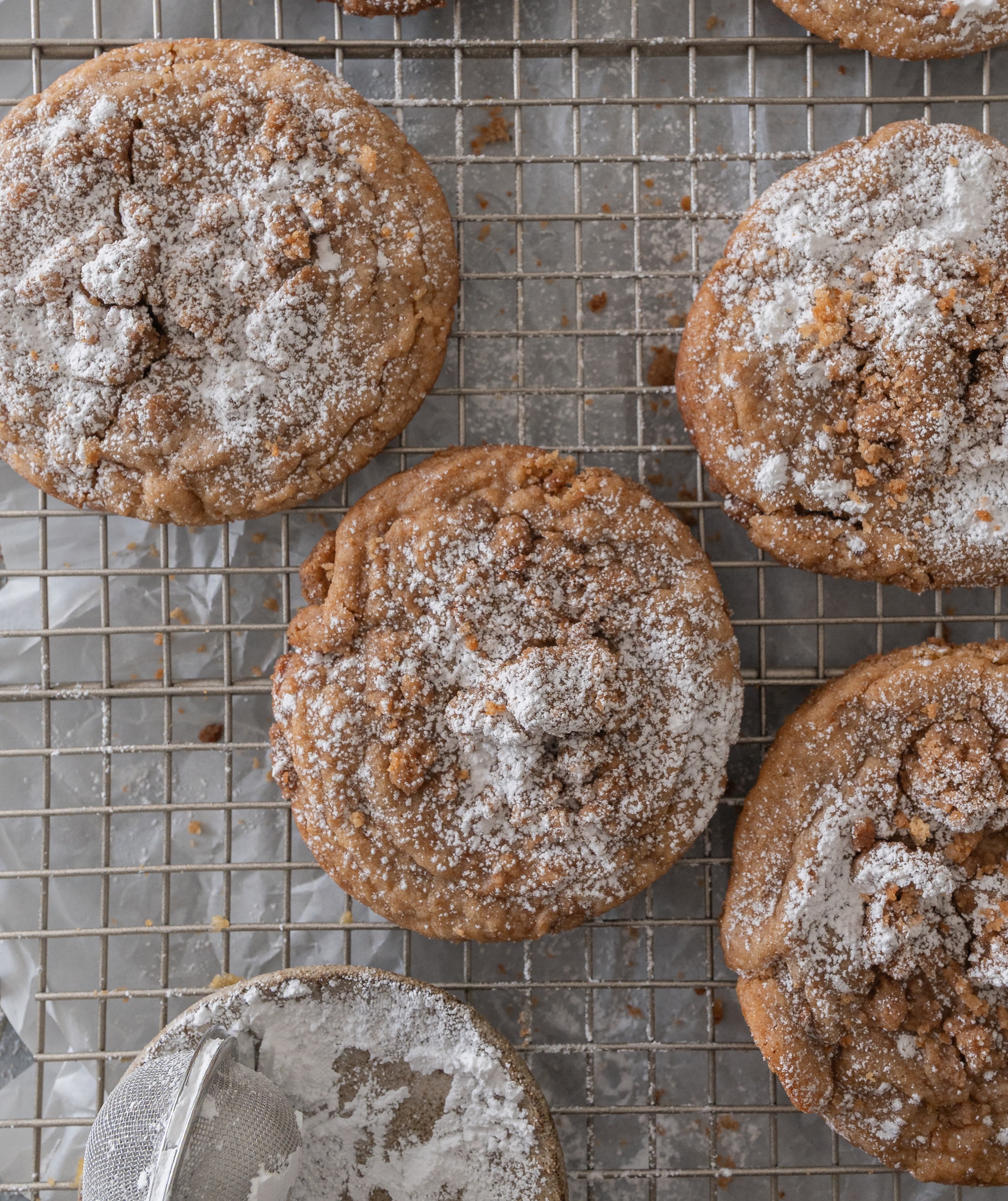
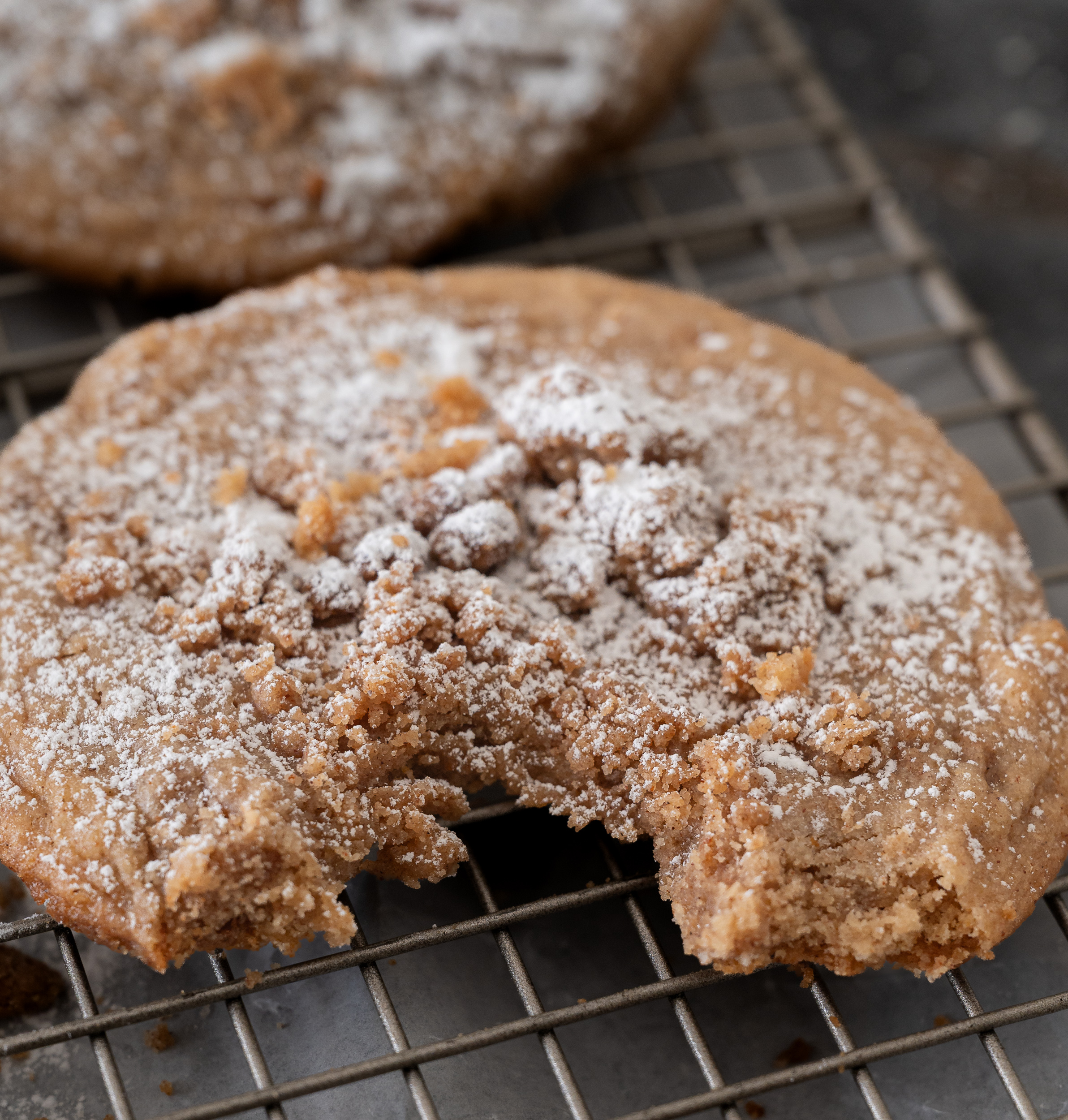
These Coffee Cake Cookies taste exactly like classic cinnamon coffee cake, but in soft, bakery-style cookie form. Made with nutty brown butter and layered with cinnamon streusel both inside the dough and piled generously on top, they deliver that buttery crumb texture you expect from a slice of coffee cake. If you enjoy coffee cakes try my Blueberry Earl Grey Coffee Cake or Pumpkin Pecan Coffee Cake.
These are not basic cinnamon cookies. They truly taste like coffee cake in cookie form!
Adds toasted, nutty depth that makes these taste elevated. It must resolidify before mixing.
Enhances the brown butter flavor by amplifying the toasted milk solids.
Keeps cookies soft and adds moisture.
Adds tenderness and prevents dryness. Plus gives the cookies that little tang similar to a traditional coffee cake.
Keeps the texture soft while maintaining thickness.
Signature coffee cake warmth. Increase in streusel if you prefer bold spice.
One third mixed into the dough for texture. The rest forms that classic crumb topping.
Brown butter transforms these coffee cake cookies from simple cinnamon cookies into something deeply flavorful and bakery-worthy. Check out how to brown butter blog post for tips. When butter is gently cooked until the milk solids toast, it develops a nutty, caramelized aroma that mimics the richness of classic coffee cake. In traditional coffee cake, flavor comes from layers of butter and streusel. In these cookies, browning the butter creates that same depth without adding extra ingredients. The toasted milk solids bring warmth and complexity that pairs perfectly with cinnamon streusel.
Brown butter also reduces excess water in the dough, which helps create thicker, more concentrated flavor. Once chilled and re-solidified, it behaves like softened butter but carries a much richer taste. If you’ve ever wondered why bakery-style cookies taste more developed and slightly nutty, brown butter is often the reason.
In a light-colored saucepan, melt 1 cup (227g) unsalted butter over medium heat. Stir constantly. The butter will foam, then settle, and brown specks will form at the bottom of the pan. When the butter smells nutty and turns a deep amber color, remove it from the heat immediately. Transfer to a heatproof bowl, stir in 1 TBSP milk powder if using, and refrigerate until solid but scoopable, about 45–60 minutes. Do not skip this step. If the butter is warm or melted when mixing, the cookies will spread too much.
In the same saucepan, brown 6 TBSP butter until lightly amber and fragrant. Remove from heat.
In a bowl, combine:
Pour the browned butter over the dry ingredients and mix until crumbly. Use your hands to create a mix of small and larger crumbs for texture. Refrigerate the streusel while preparing the dough to help it firm up.
In a large bowl, cream the solidified brown butter with the granulated sugar and light brown sugar until light and fluffy. A stand mixer or handheld electric mixer works best. Add the egg, vanilla extract, and sour cream. Mix until smooth and fully combined.
In a separate bowl, whisk together:
Add the dry ingredients to the wet ingredients and mix until just combined. Do not overmix. Fold in one third of the chilled streusel mixture. Approximately 1 cup (120g). Cover and refrigerate the dough for at least 1 hour.
Preheat oven to 350°F. Line a baking sheet with parchment paper. Divide the dough into 10 large portions. Roll into balls and place spaced apart on the prepared baking sheet. Using the back of a spoon, gently press the center of each dough ball to create a shallow well.
Fill each indentation generously with the remaining streusel topping. For extra thick bakery-style cookies, chill the shaped dough for an additional 15–20 minutes before baking. This is optional.
Bake at 350°F for 11–13 minutes, until the edges are set and lightly golden. The centers should look slightly soft. If the cookies spread more than desired, immediately place a large round object like a mug or bowl around the cookie and gently swirl to reshape into a perfect circle.
Cool completely before dusting with powdered sugar or drizzling with glaze.
Chilling prevents spreading and helps develop flavor.
If the brown butter is warm or melted, the cookies will spread excessively.
Yes. Reduce baking time by 2–3 minutes.
Yes, but flavor depth will be slightly reduced.
It mimics classic coffee cake layers and adds texture in every bite.
-Store in an airtight container at room temperature for up to 4 days.
-Freeze baked cookies up to 2 months.

You want golden, not burnt. Think toasted hazelnut, not coffee ash.
You can brown all the butter for the recipe at the same time (1 cup + 6 TBSP total). After browning, weigh the butter and divide it proportionally: about 73% for the cookie dough and 27% for the streusel. This accounts for natural water loss during browning and keeps the ratios accurate.
Think of it as a flavor amplifier, not a requirement.
Whisk together:
Add milk gradually until desired consistency. Drizzle over cooled cookies.
Store in an airtight container at room temperature for up to 4 days.
Cookies stay soft thanks to sour cream and brown sugar.
Freeze baked cookies up to 2 months.
I’m so grateful you’re here! Have a look around at some of my favourite recipes and stay a while.
Get a fresh delivery of only the goods delivered to your inbox.


Leave a Comment
Did you make this recipe? I'd love to hear how it turned out. Leave a comment and share your tweaks.
-- / 5 average rating from -- reviews
Lorem ipsum dolor sit amet, consectetur adipiscing elit. Suspendisse varius enim in eros elementum tristique. Duis cursus, mi quis viverra ornare, eros dolor interdum nulla, ut commodo diam libero vitae erat. Aenean faucibus nibh et justo cursus id rutrum lorem imperdiet. Nunc ut sem vitae risus tristique posuere. uis cursus, mi quis viverra ornare, eros dolor interdum nulla, ut commodo diam libero vitae era
Lorem ipsum dolor sit amet, consectetur adipiscing elit. Suspendisse varius enim in eros elementum tristique. Duis cursus, mi quis viverra ornare, eros dolor interdum nulla, ut commodo diam libero vitae erat. Aenean faucibus nibh et justo cursus id rutrum lorem imperdiet. Nunc ut sem vitae risus tristique posuere. uis cursus, mi quis viverra ornare, eros dolor interdum nulla, ut commodo diam libero vitae era