If you're looking for the best brown butter chocolate chip cookies, this recipe delivers crisp edges, chewy centers, and deep caramel flavor from perfectly toasted butter. Instead of using regular melted butter, the butter is browned until the milk solids turn golden and nutty. This simple step transforms a classic chocolate chip cookie into something richer, deeper, and bakery-worthy. Once you start baking cookies with brown butter, it’s hard to go back. And as someone who truly loves a good chocolate chip cookie, and have tested dozens of chocolate chip cookies that extra depth of flavor makes all the difference.
These cookies are simple enough for the first-time baker, but special enough to become one of your favorite cookie recipes. The dough comes together easily in one bowl using a whisk and a rubber spatula or wooden spoon, then the cookie dough balls chill before baking to develop flavor and texture. Once baked, the cookies turn golden brown with slightly underbaked centers, creating that perfect balance of crispy edges and soft interiors. If you love brown butter cookies, you may also enjoy some of my other variations like brown butter miso chocolate chip cookies, brown butter chocolate chip toffee cookies, brown butter chocolate chip pretzel toffee cookies, or brown butter espresso chocolate chip toffee cookies.

Brown butter transforms a classic chocolate chip cookie into something deeper and more complex. As butter cooks over medium heat, the milk sugars caramelize and create tiny brown specks and toasted milk solids. These golden bits are packed with flavor and give the cookies their signature nutty aroma. Adding milk powder during the cooking process intensifies that toasted flavor even further. The result is a deep, almost toffee-like richness that elevates the entire cookie.
The result is the perfect chocolate chip cookie with:
• crisp edges
• chewy centers
• large chunks of chocolate
• deep brown butter flavor

This recipe focuses on a few small techniques that create the perfect chocolate chip cookie.
• Brown butter adds deep caramel flavor and a nutty aroma.
• Brown sugar creates soft, chewy centers.
• Cornstarch keeps the cookies tender while still allowing crisp edges.
• Chilling the cookie dough balls helps control spreading and improves flavor.
For best results, you'll need:
• Kitchen scale (recommended for measuring flour)
• Large bowl
• Rubber spatula or wooden spoon
• Cookie scoop
• Parchment paper
• Cookie sheet or baking sheet
• Wire rack

Butter is the foundation of the cookie’s flavor and texture. In this recipe, the butter is browned first, which toasts the milk solids and creates a rich, nutty flavor. Browning the butter also removes some moisture, helping the cookies develop deeper caramel notes.
Milk powder enhances the flavor of the browned butter. When stirred into the hot butter, it toasts slightly and intensifies the nutty, caramelized flavor. This simple ingredient gives the cookies a subtle bakery-style richness.
Espresso powder deepens the overall flavor of the cookies and enhances the chocolate. It does not make the cookies taste like coffee once baked. You may notice a slight coffee aroma when tasting the raw dough, but the flavor disappears after baking and simply makes the chocolate taste richer. If you prefer a milder flavor, you can reduce the espresso powder to ½ teaspoon or omit it completely.
Brown sugar adds moisture and chewiness to the cookies. It also contributes a subtle caramel flavor that pairs perfectly with the brown butter.
Granulated sugar helps create crisp edges and encourages caramelization as the cookies bake.
The egg provides structure, while the extra egg yolk adds richness and contributes to the cookies’ chewy centers.
Vanilla enhances the overall flavor of the cookies and complements both the chocolate and brown butter.
All-purpose flour provides the structure for the cookies. Measuring the flour correctly ensures the cookies spread properly and do not become dry or cakey.
A small amount of cornstarch helps create a soft, tender texture while still allowing the cookies to develop crisp edges.
Baking soda helps the cookies spread slightly and contributes to the golden brown color.
A small amount of baking powder adds just enough lift to keep the cookies soft in the center.
Salt balances the sweetness and enhances the flavors of the chocolate and brown butter.
Using chopped chocolate instead of chips creates large melted pools of chocolate throughout the cookies. A combination of dark and semi-sweet chocolate provides a balanced flavor.
I didn't make this optional and for reason!. A light sprinkle of flaky sea salt on top enhances the balances the sweetness of the cookies and adds a small burst of flavor and contrast in each bite.
Place the butter in a light-colored saucepan over medium heat. Allow the butter to melt completely, then continue cooking. The butter will foam and then begin to quiet as the toasted milk solids settle. Swirl the pan occasionally and watch carefully for golden brown bits forming on the bottom. When the butter turns a deep amber color and smells nutty, remove it from the heat. Immediately pour the brown butter into a large bowl and stir in the milk powder and espresso powder if using. Let the butter cool for about 10 minutes.
Add the brown sugar and white sugar to the cooled brown butter. Whisk until the mixture becomes smooth and glossy.
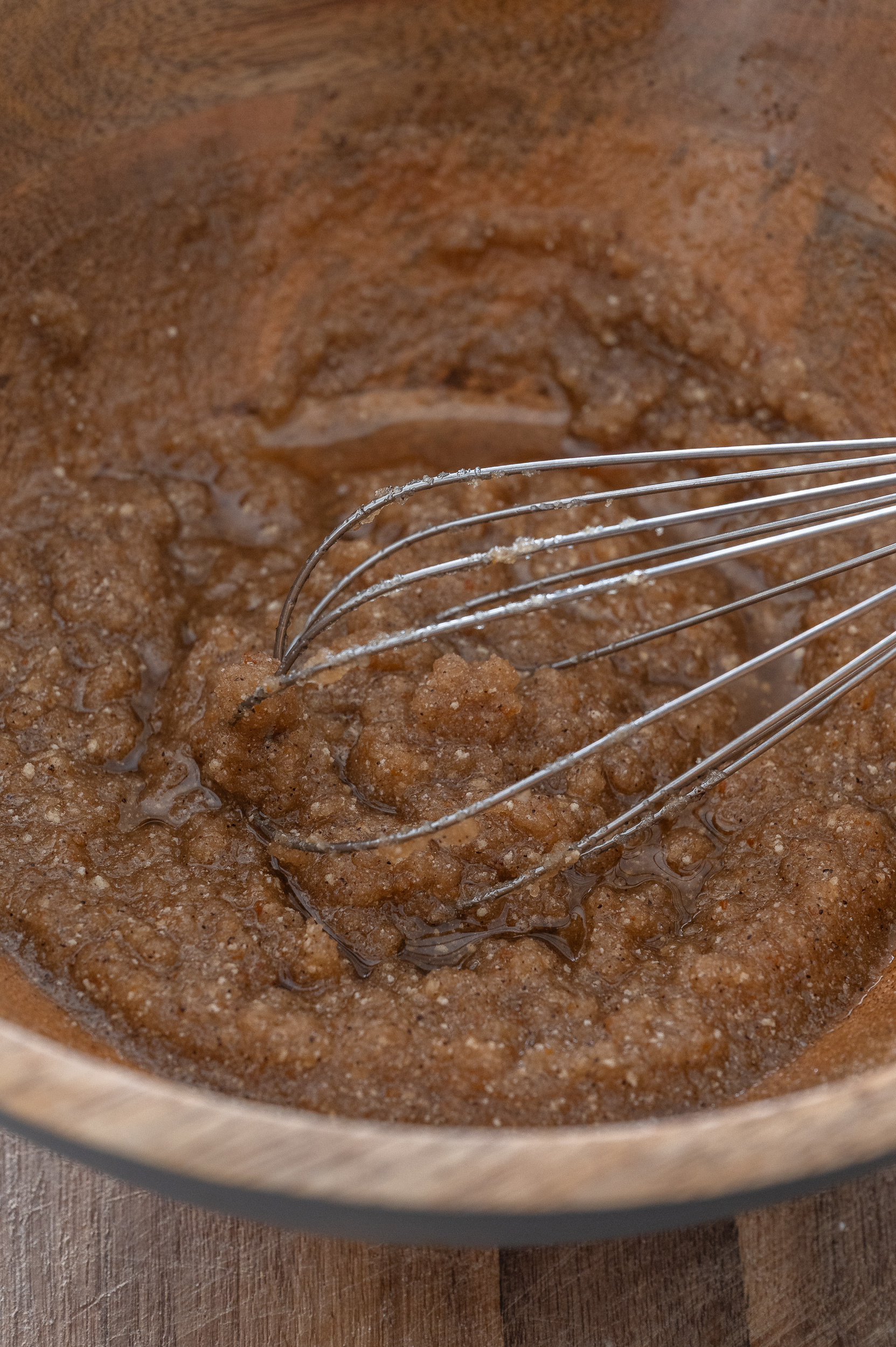
Whisk in whole egg, egg yolk and vanilla extract. Mix until fully incorporated.

Add the all-purpose flour, cornstarch, baking soda, baking powder, and salt. Using a rubber spatula or wooden spoon, gently fold the dry ingredients into the wet ingredients until a soft cookie dough forms and only a few flour streaks remain. Add the chopped chocolate and fold until evenly distributed. Avoid adding too much flour, which can make cookies dry or prevent them from spreading.


Using a cookie scoop, portion the dough into large balls of dough 1/4 cup (85 g / 3 oz) of dough per cookie. Place the cookie dough balls onto a parchment-lined cookie sheet. Press a few extra chocolate chunks on top of each dough ball for bakery-style presentation.

Cover the dough and refrigerate for at least 1 hour and up to 48 hours. This step allows the flour mixture to hydrate and develops deeper flavor in the cookie dough. If you're short on time, the cookies can be baked right away, but chilling will give the best results.
Preheat the oven to 350°F (175°C). Place the cookie dough balls onto a parchment-lined baking sheet, leaving several inches between each cookie. Bake for 10–12 minutes, until the edges are golden brown and the centers still look slightly underbaked.

Sprinkle the cookies lightly with flaky sea salt. Allow the cookies to rest on the cookie sheet for about 5 minutes, then transfer them to a wire rack. The cookies will continue to set as they cool, creating crispy edges and chewy centers.
Store cookies in an airtight container at room temperature for up to 4 days.
To freeze, place the cookie dough balls in a freezer bag and freeze for up to 2 months. Bake frozen cookies directly from the freezer, adding 1–2 minutes to the bake time. Frozen dough is a great way to enjoy fresh cookies anytime.
For the best chocolate chip cookies, measuring flour correctly is essential. Using too much flour is one of the most common reasons cookies turn out dry or fail to spread. For best results, use a kitchen scale.
If measuring with cups:
• spoon flour into the measuring cup
• level it with a knife
• never scoop directly from the bag
Milk powder intensifies the nuttiness of the browned butter and adds subtle bakery-style depth. It’s usually found in the baking aisle near evaporated milk or powdered dairy products.If you cannot find it, you can skip it. The cookies will still be delicious, though you’ll lose a little of that toasted richness.
A few small details can make a big difference when baking chocolate chip cookies. These tips will help you get cookies with crisp edges, chewy centers, and deep brown butter flavor every time.
A light-colored saucepan makes it easier to see the toasted milk solids forming on the bottom of the pan. This helps prevent the butter from burning during the cooking process.
Adding too much all-purpose flour is one of the most common reasons cookies turn out dry or don’t spread properly. For best results, use a kitchen scale. If measuring with cups, spoon flour into the measuring cup and level it off with a knife instead of scooping directly from the bag.
Chilling the dough for at least 1 hour allows the flour mixture to fully hydrate and helps the cookies develop deeper flavor. It also prevents the cookie dough balls from spreading too quickly in the oven.
Always bake cookies on parchment paper or a silicone baking mat. This prevents sticking and helps cookies bake more evenly.
The cookies should look slightly underbaked in the center when you remove them from the oven. They will continue baking from the heat on the bottom of the pan as they cool. This is what creates the perfect combination of crispy edges and chewy centers.
This is my favorite and easiest thing to do to make chocolate chip cookies have that elevated look! Press a few extra chocolate chunks on top of each dough ball before baking. This creates those beautiful large chocolate pools that make bakery-style cookies look irresistible.

Brown butter adds a deep nutty flavor and caramel-like richness that regular butter cannot provide. The toasted milk solids create a more complex flavor that elevates classic chocolate chip cookies.
Yes. Chocolate chips work perfectly well in this recipe. However, chopped chocolate bars tend to melt into larger chocolate pools, which gives the cookies a more bakery-style appearance.
This usually happens when too much flour is added to the dough. Measuring flour with a kitchen scale helps ensure accuracy. Another reason may be baking very cold dough, which can slow spreading slightly.
Yes. Scoop the dough into cookie dough balls, place them in a freezer bag, and freeze for up to 2 months. Bake directly from frozen, adding 1–2 minutes to the bake time.
Store cookies in an airtight container at room temperature for up to 4 days.
Using brown sugar, an extra egg yolk, and a small amount of cornstarch creates cookies with soft, chewy centers while still maintaining crisp edges.

Wet:
Dry:
Mix-ins:
Topping:
You want golden, not burnt. Think toasted hazelnut, not coffee ash.
Think of it as a flavor amplifier, not a requirement.
Measuring flour properly makes a big difference in how your cookies turn out. For best results, use a kitchen scale and measure in grams. This ensures consistency and prevents adding too much flour, which can make cookies dry or dense.
If you don’t have a scale:
Too much flour is one of the most common reasons cookies don’t spread properly and your cookies can become dry and cakey.
I’m so grateful you’re here! Have a look around at some of my favourite recipes and stay a while.
Get a fresh delivery of only the goods delivered to your inbox.


Leave a Comment
Did you make this recipe? I'd love to hear how it turned out. Leave a comment and share your tweaks.
-- / 5 average rating from -- reviews
Lorem ipsum dolor sit amet, consectetur adipiscing elit. Suspendisse varius enim in eros elementum tristique. Duis cursus, mi quis viverra ornare, eros dolor interdum nulla, ut commodo diam libero vitae erat. Aenean faucibus nibh et justo cursus id rutrum lorem imperdiet. Nunc ut sem vitae risus tristique posuere. uis cursus, mi quis viverra ornare, eros dolor interdum nulla, ut commodo diam libero vitae era
Lorem ipsum dolor sit amet, consectetur adipiscing elit. Suspendisse varius enim in eros elementum tristique. Duis cursus, mi quis viverra ornare, eros dolor interdum nulla, ut commodo diam libero vitae erat. Aenean faucibus nibh et justo cursus id rutrum lorem imperdiet. Nunc ut sem vitae risus tristique posuere. uis cursus, mi quis viverra ornare, eros dolor interdum nulla, ut commodo diam libero vitae era