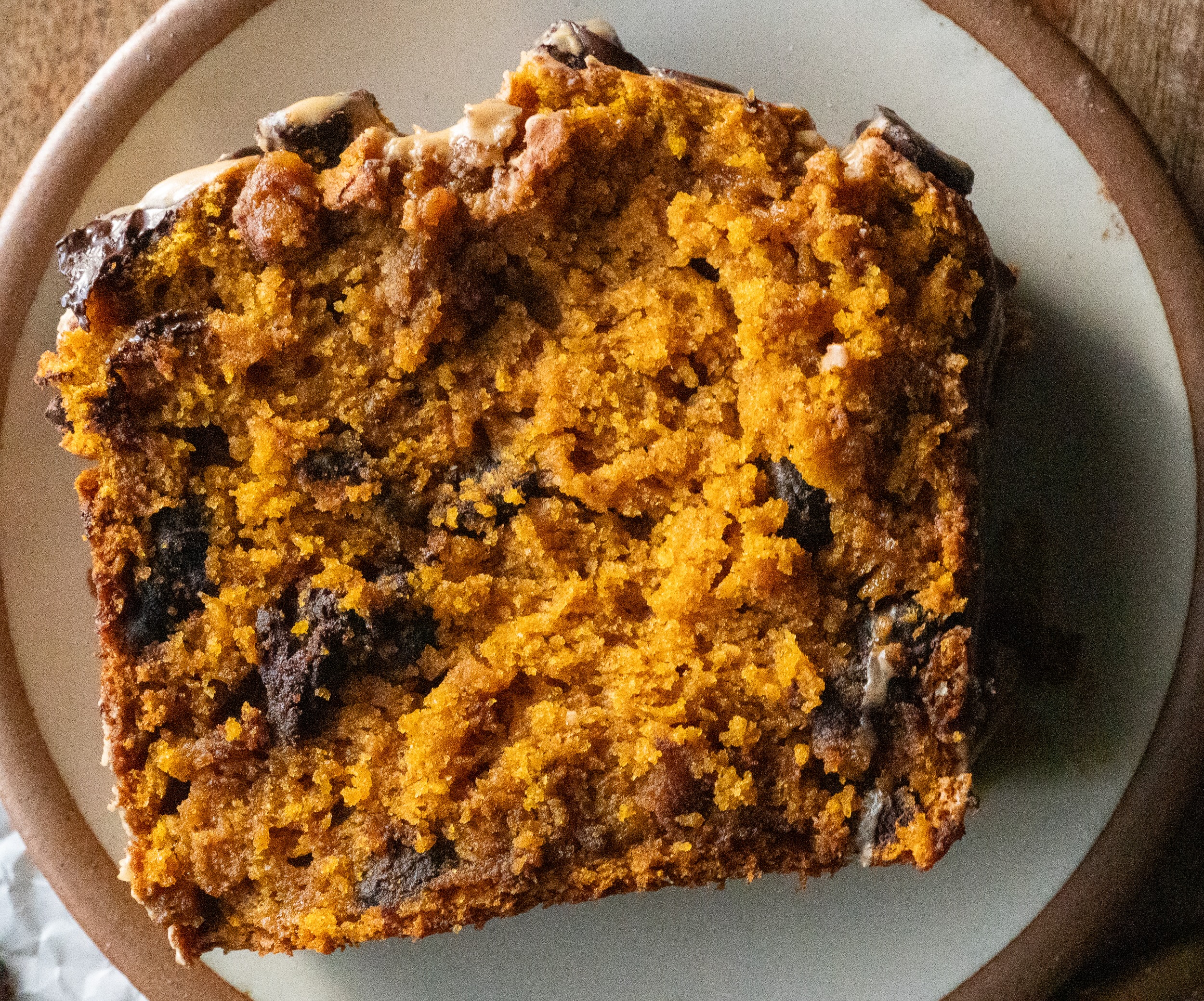
This Brown Butter Pumpkin Chocolate Chip Espresso Bread has quickly become one of my new favorite recipes, mostly because I enjoy the combination of espresso, and dark chocolate similar to my chocolate chip espresso toffee cookies, and the addition of pumpkin and warm spices takes it to another level. Each flavor brings something different to the loaf, but together they just work. Everytime I bake this recipe I find myself reaching for a slice every morning with a cup of coffee.
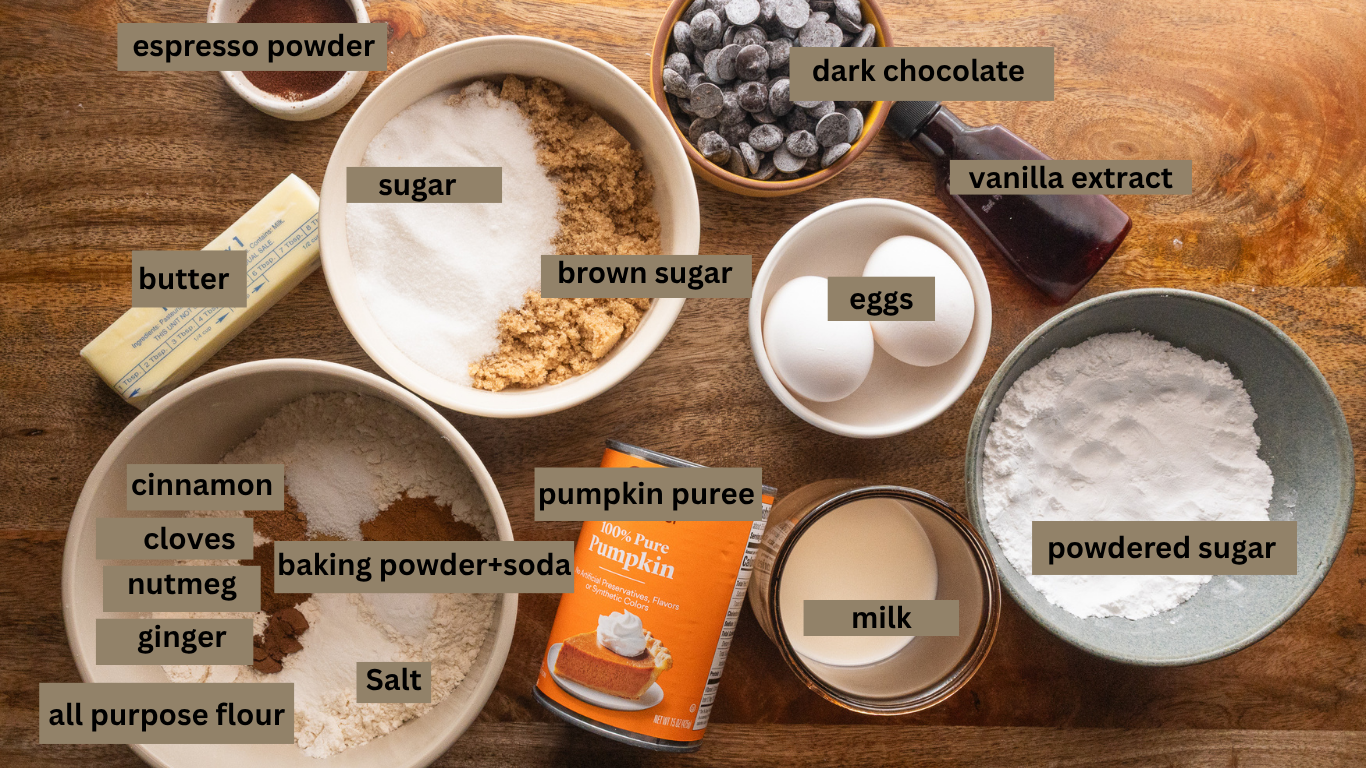
The butter is browned before being added to the batter. As it cooks, the milk solids toast and develop a deep, nutty flavor that gives the pumpkin bread more complexity than ordinary melted butter. Be sure to scrape every last brown speck from the pan into your mixing bowl. That's where much of the flavor lives.
Brown sugar gives the bread moisture and the sugar adds additional sweetness without making the batter too dense.
Eggs give the pumpkin bread structure and help bind the high moisture batter together.
A full 1 tablespoon of vanilla extract brings out the warm flavors of the loaf and works particularly well with the brown butter and chocolate.
Make sure you're using pumpkin puree rather than pumpkin pie filling. Pumpkin pie filling already contains sugar and spices and will change both the flavor and consistency of the bread.
Whole milk loosens the batter slightly and helps create a softer crumb.
The flour will help to stabilize the cake. You'll need 2 cups (240g) all-purpose flour. For the most accurate results, weigh your flour with a kitchen scale. If measuring with cups, spoon the flour into the measuring cup and level off the top instead of scooping directly from the bag.
Too much flour is one of the easiest ways to turn moist pumpkin bread into a dry loaf.
The combination provides enough lift for the heavy pumpkin batter while maintaining the soft, tight crumb you want in a quick bread.
I prefer to use individual spices if I have it on hang for greater control over the flavor. If all you have is pumpkin spice you can use 2 tsp and 1 tsp of cinnamon.
Salt balances the sweetness and makes the chocolate, spices, vanilla, and brown butter taste more pronounced.
The dark chocolate with the espresso is a heavenly pairing. You can also use semi-sweet chocolate. A chopped chocolate bar will create irregular pockets and streaks of melted chocolate, while chocolate chips tend to hold their shape. Either works beautifully.
Both are needed to make the espresso glaze, which is my favorite part of this pumpkin bread. It adds a concentrated coffee flavor that works particularly well with the dark chocolate and brown butter. Use an additional 1/4 tsp if you prefer a stronger espresso flavor.
Place the butter in a light-colored saucepan over medium heat. Allow it to melt completely. The butter will begin to foam, bubble, and crackle as the water evaporates. Continue cooking, swirling or stirring frequently. After several minutes, you'll notice golden brown milk solids forming at the bottom of the pan and the butter will begin to smell deeply nutty and toasted. Once the milk solids are amber-brown, immediately remove the pan from the heat. Pour the brown butter, including all of the browned milk solids, into a large heat-safe mixing bowl. Allow it to cool for approximately 10–15 minutes. Once the butter is cool to touch that when you know it's ready to be used for the batter. It shouldn't be piping hot before you add the eggs.
Preheat the oven to 350°F (175°C). Grease a 9 x 5-inch loaf pan and line it with parchment paper, leaving a little overhang along the longer sides. The parchment will make it much easier to lift the finished bread out of the pan.
Add the brown sugar and granulated sugar to the slightly cooled brown butter. Whisk until the ingredients are well combined and the mixture looks glossy and sandy.
Add the eggs one at a time, whisking well after each addition. Whisk in the vanilla extract. The mixture should look smooth and slightly thickened.
Add the entire can of pumpkin puree and milk and whisk until completely incorporated.
In a separate bowl, whisk together, all-purpose flour, baking powder, baking soda, cinnamon, ginger, nutmeg, cloves, allspice and salt. Whisk thoroughly so the leavening agents and spices are evenly distributed throughout the flour.
Add the dry ingredients to the pumpkin mixture. Using a rubber spatula, gently mix everything together just until most of the flour disappears. Avoid aggressively stirring the batter. Overmixing can make the pumpkin bread tougher instead of soft and tender.
Add the dark chocolate chips or chopped chocolate into the batter until evenly distributed. Stop mixing as soon as everything is combined.
Pour the batter to the prepared loaf pan. Smooth the top with a spatula. If you'd like, scatter a small handful of additional chopped chocolate or chocolate chips over the surface before baking.
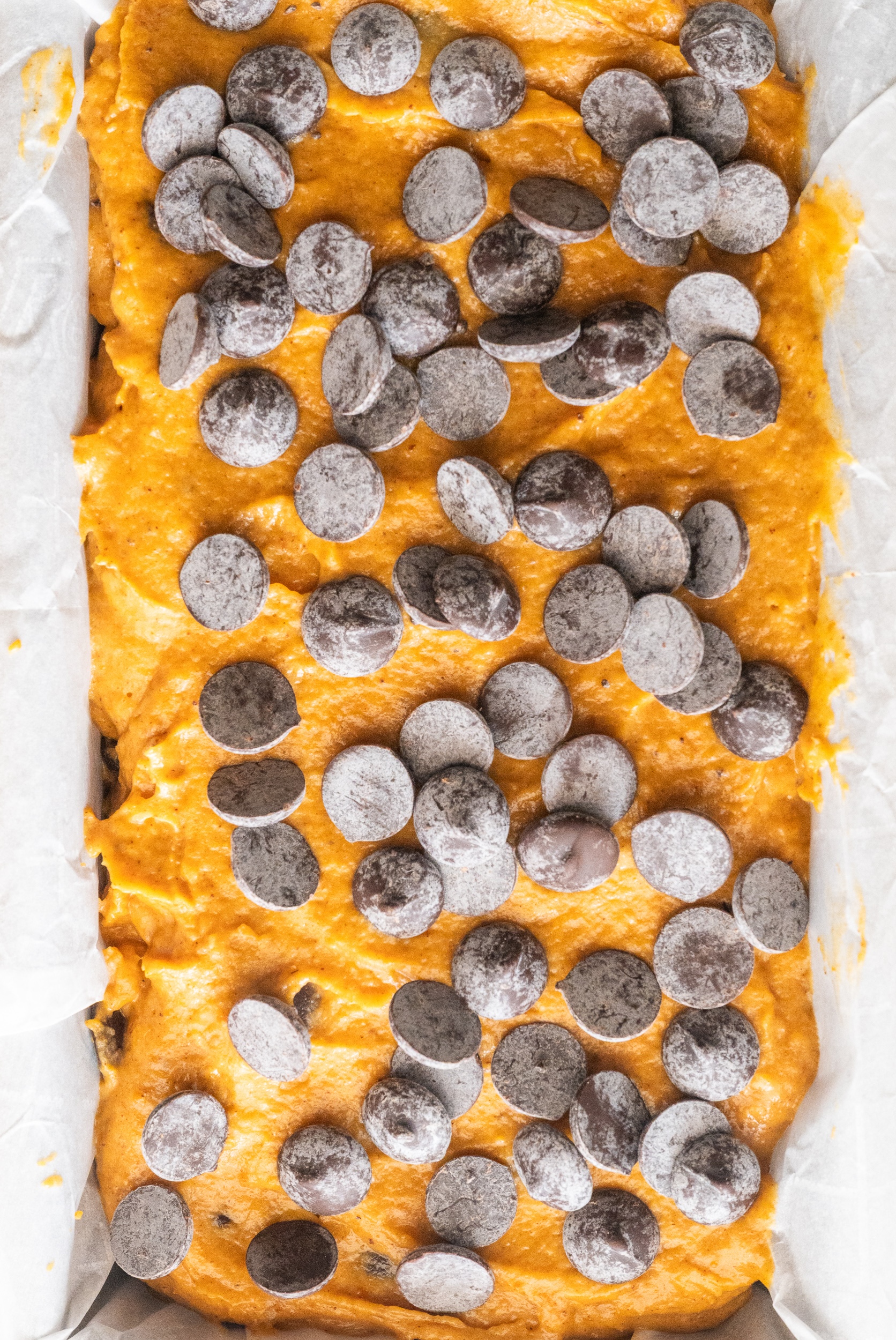
Bake at 350°F until the loaf has risen and is set in the center, and a toothpick inserted into the middle comes out with a few moist crumbs rather than wet batter. Start checking the loaf around 55–60 minutes. Depending on your oven and loaf pan, it may need approximately 60–75 minutes. I needed 70 minutes to bake my loaf. If the top begins browning too quickly while the center still needs additional time, loosely cover the loaf with aluminum foil and continue baking. For an especially accurate check, the center of a baked quick bread will generally register around 200–205°F on an instant-read thermometer.
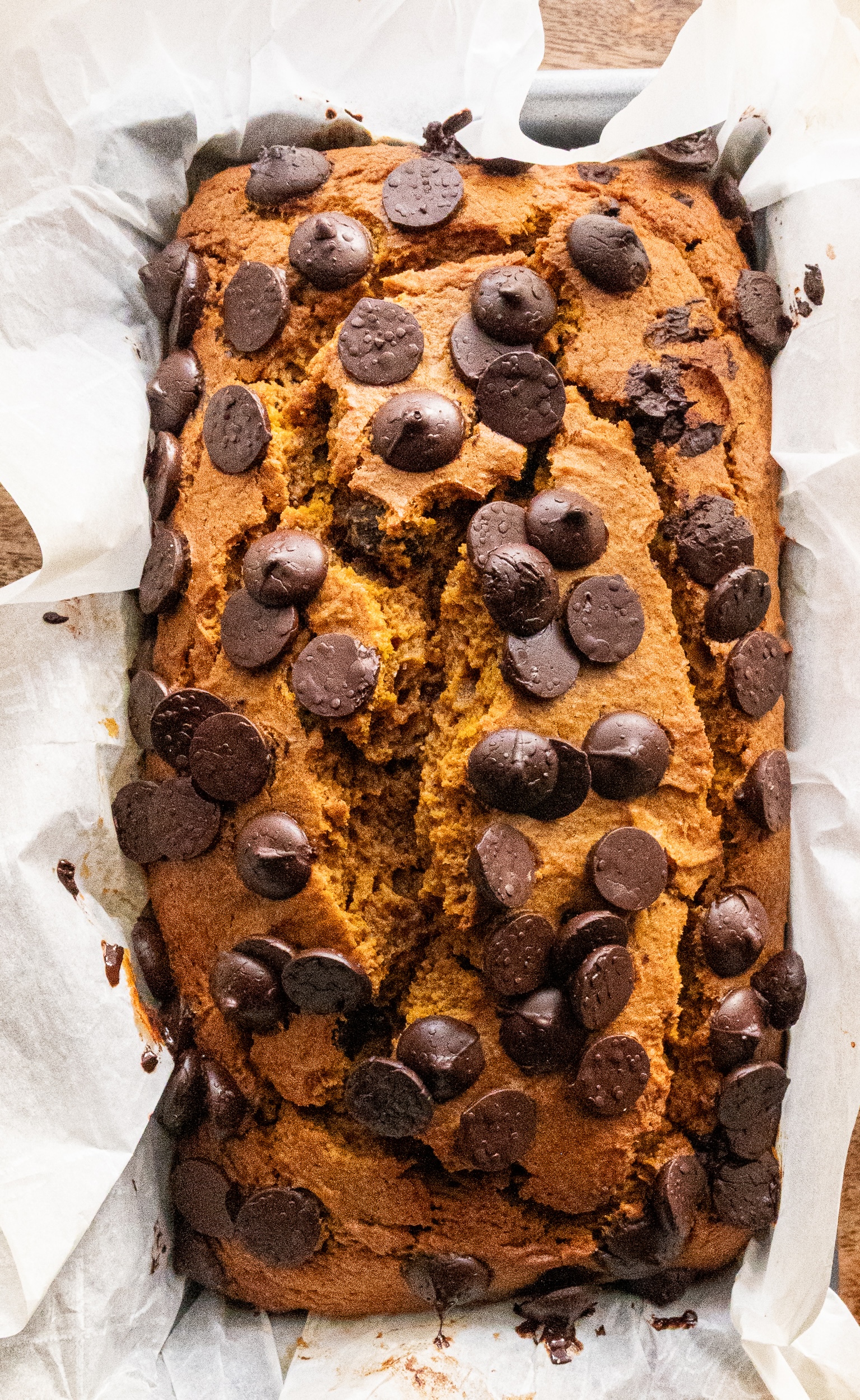
Allow the pumpkin bread to cool in the pan for about 15–20 minutes. Use the parchment paper to carefully lift it from the pan and place it on a cooling rack. Allow the loaf to cool completely before glazing. This is important. Adding glaze to warm pumpkin bread can cause it to melt, thin out, and disappear into the loaf rather than setting beautifully on top.
In a medium to large mixing bowl add 1 tablespoon hot water with the espresso and mix until the espresso has dissolved. Add the sifted powdered sugar, vanilla extract, pinch of salt and room temperature water. Whisk until smooth. Add additional water one teaspoon at a time until the glaze reaches your desired consistency. I prefer a thicker glaze and used 2 tsp and stopped adding water when the glaze slowly fell from the whisk in a thick ribbon. Pour or spoon the espresso glaze over the completely cooled pumpkin bread. Allow the glaze to set before slicing.
There's a fine line between brown butter and burned butter. Once the milk solids reach a deep golden amber color and smell nutty, remove the pan from the heat. The residual heat in the saucepan will continue cooking the butter for a few moments. Also, don't strain your butter. Those dark toasted milk solids contain much of the brown butter flavor you want in the bread.
Check the label carefully. You want 100% pumpkin puree without added sweeteners or spices.
Pumpkin bread already contains substantial moisture. Using too much flour in an attempt to compensate can produce a dense, dry loaf. A kitchen scale is the most reliable method.
Once the flour is added, switch from a whisk to a rubber spatula. Fold only until the ingredients are combined.
Pumpkin bread is sweet, so dark or bittersweet chocolate gives the loaf a nice balance.Chopped chocolate also creates those gorgeous melted pools when the bread is sliced warm.
If you want a thick white espresso glaze rather than a translucent glaze that sinks into the loaf, the bread must be completely cool.
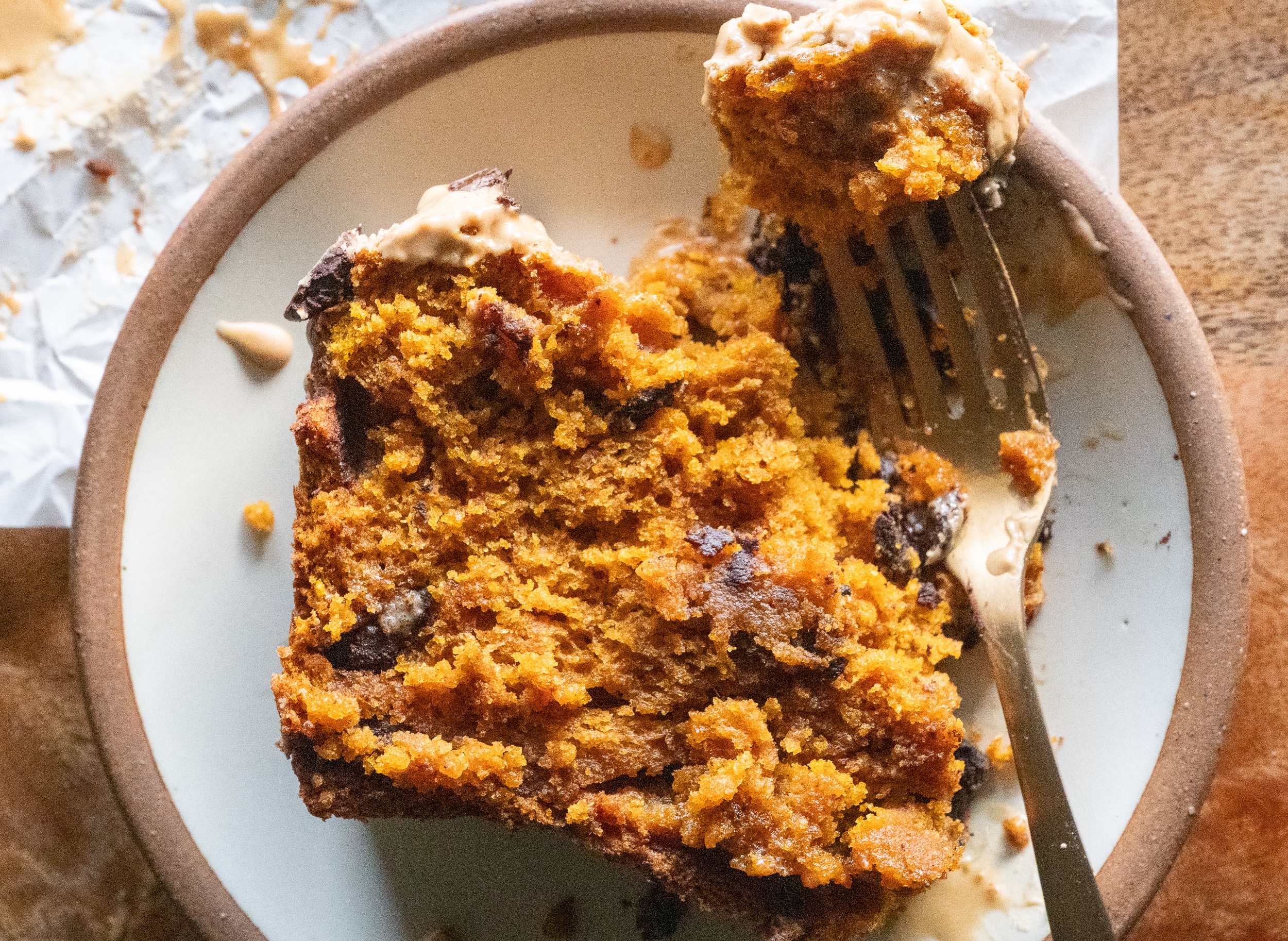
Pumpkin bread can be deceptive because the outside may look completely baked while the center is still underdone. Insert a toothpick or thin knife into the center of the loaf. A few moist crumbs are fine. Wet pumpkin batter is not. If you happen to have an instant read thermometer the center should reach approximately 200–205°F. Also, the bread will continue setting slightly as it cools.
A gummy or underbaked center can happen for several reasons, it needed more baking time. Pumpkin creates a very moist batter, so pumpkin loaves frequently take longer than lighter quick breads. Too much flour or liquid was measured incorrectly. Small measuring errors can significantly alter a quick bread batter. The loaf was sliced too soon. Pumpkin bread continues setting as it cools. Cutting it while very hot can make even properly baked bread appear wet or gummy. Also, your loaf pan is smaller. A smaller or deeper pan creates a thicker loaf that requires more baking time.
Sure! You can make the pumpkin bread without chocolate. The brown butter and fall spices provide plenty of flavor on their own.
Yes, the loaf is flavorful enough to serve without glaze, although the espresso glaze adds a delicious coffee chocolate element that makes this version special. One of my faves!!
The bread itself doesn't contain espresso powder, so the coffee flavor comes primarily from the glaze. You'll notice espresso, but it shouldn't overwhelm the pumpkin, chocolate, or spices.
Espresso powder is best because it dissolves easily and provides concentrated flavor without requiring much additional liquid. Instant coffee can work in a pinch, but the flavor may be milder and the granules may not dissolve quite as smoothly.
Use canned 100% pumpkin puree. Do not use pumpkin pie filling!
Yes. In fact, pumpkin bread often tastes even better the following day after the spices and pumpkin flavor have had time to settle. If you're preparing it ahead, you can bake the loaf one day in advance and add the espresso glaze once the bread is completely cool.
Store the pumpkin bread in an airtight container at room temperature for approximately 2–3 days. If the bread has already been glazed, make sure the glaze has completely set before covering it. Placing plastic wrap directly against a fresh glaze may cause it to stick and pull away from the bread.
For longer storage, refrigerate the loaf in an airtight container for up to approximately 5–7 days. Allow individual slices to come closer to room temperature before serving for the softest texture.
Pumpkin bread freezes very well. For best results, freeze the loaf without the espresso glaze. Wrap the completely cooled loaf or individual slices tightly in plastic wrap and place inside a freezer-safe container or bag.
Freeze for up to approximately 2–3 months. Thaw overnight in the refrigerator or at room temperature, then add fresh espresso glaze before serving.
Measuring flour properly makes a big difference in how your baked recipes turn out. For best results, use a kitchen scale and measure in grams. This ensures consistency and prevents adding too much flour, which can make this cake dry or dense.
If you don’t have a kitchen scale:
Too much flour is one of the most common reasons baked recipes can become dry and cakey
I’m so grateful you’re here! Have a look around at some of my favourite recipes and stay a while.
Get a fresh delivery of only the goods delivered to your inbox.


Leave a Comment
Did you make this recipe? I'd love to hear how it turned out. Leave a comment and share your tweaks.
-- / 5 average rating from -- reviews
Lorem ipsum dolor sit amet, consectetur adipiscing elit. Suspendisse varius enim in eros elementum tristique. Duis cursus, mi quis viverra ornare, eros dolor interdum nulla, ut commodo diam libero vitae erat. Aenean faucibus nibh et justo cursus id rutrum lorem imperdiet. Nunc ut sem vitae risus tristique posuere. uis cursus, mi quis viverra ornare, eros dolor interdum nulla, ut commodo diam libero vitae era
Lorem ipsum dolor sit amet, consectetur adipiscing elit. Suspendisse varius enim in eros elementum tristique. Duis cursus, mi quis viverra ornare, eros dolor interdum nulla, ut commodo diam libero vitae erat. Aenean faucibus nibh et justo cursus id rutrum lorem imperdiet. Nunc ut sem vitae risus tristique posuere. uis cursus, mi quis viverra ornare, eros dolor interdum nulla, ut commodo diam libero vitae era