These cookies were an instant hit in my peach loving Georgia household. If you enjoy peach cobbler you will enjoy this cookie recipe. It's soft, chewy and the peach filling with the cinnamon cookie dough pairs well beautifully. Try my peach fritter loaf cake, peach coffee cake or peach blondies for other peach recipes!
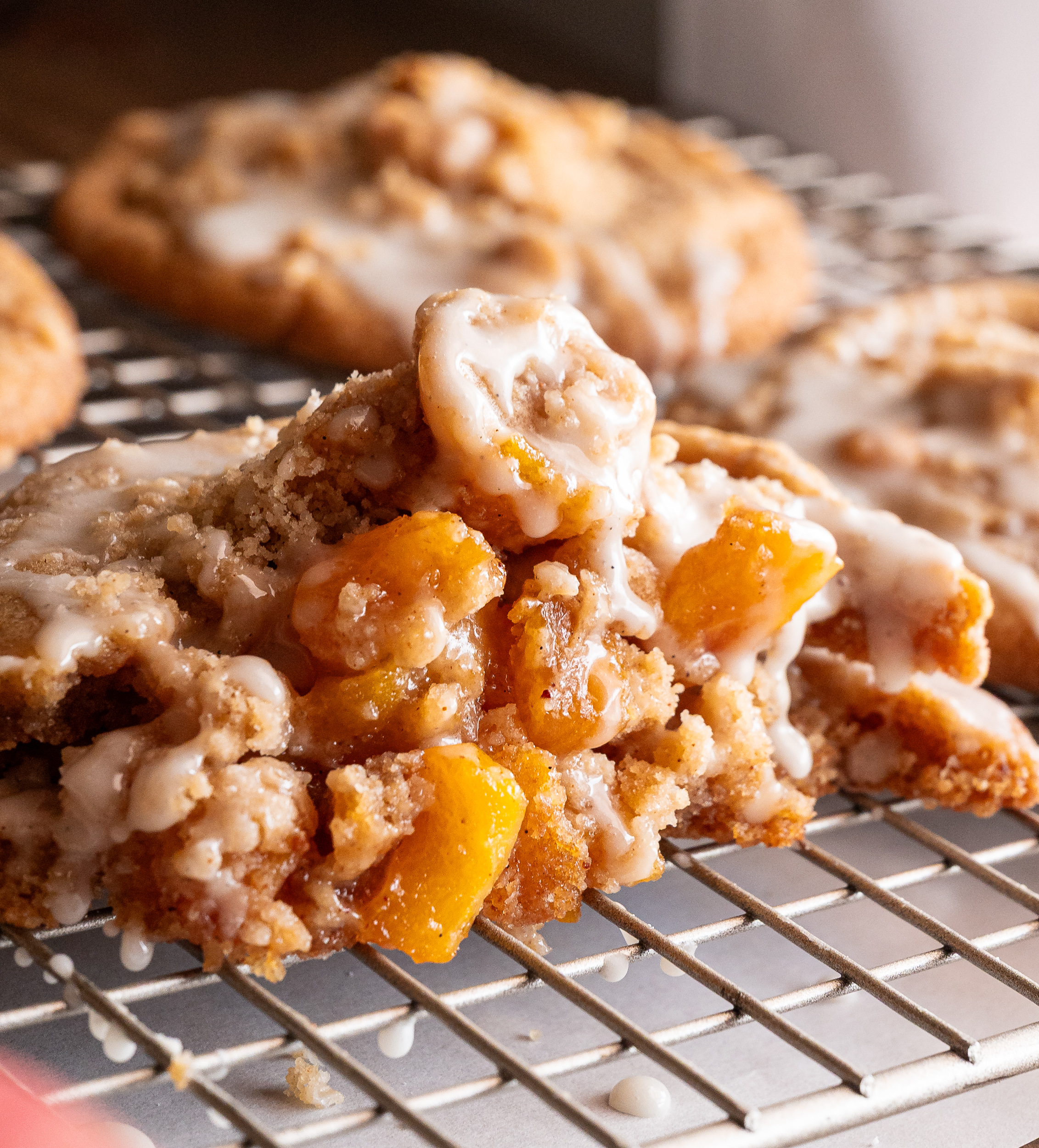
Peach cobbler coffee cake cookies are oversized brown butter cookies inspired by both homemade peach cobbler and cinnamon coffee cake. Instead of mixing peaches directly into the cookie dough, a thick peach filling is frozen and stuffed into the center of each cookie. This creates a concentrated pocket of peach flavor without introducing too much moisture into the dough. The cookies are then topped with a cinnamon crumb topping before baking. Once cooled, they are finished with vanilla glaze.
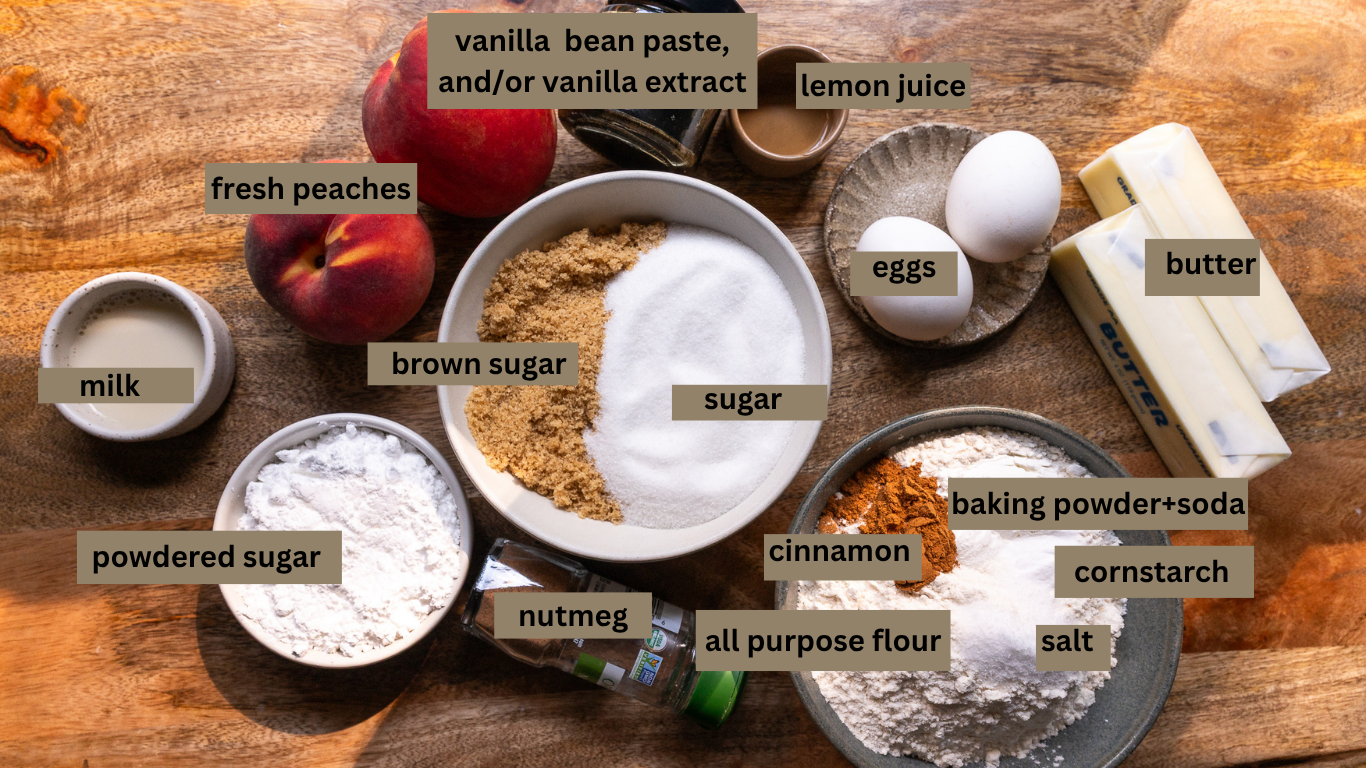
Browning the butter creates a rich, nutty almost caramel like flavor that complements the peaches, cinnamon, and brown sugar.
Milk powder is optional, but it adds extra milk solids to the butter. When browned, those milk solids become deeply toasted and intensify the brown butter flavor.
Granulated sugar helps with spreading and creating those lightly crisp edges. Brown sugar contributes to the moisture, caramel flavor, and a softer center. The granulated sugar to brown sugar ratio is a little more than what I'm used to, to keep the cookie from becoming overly soft beneath the peach filling and crumb topping.
The whole egg binds the dough, while the extra yolk adds richness and chewiness.
Cornstarch tenderizes the cookie and helps create a softer center.
Fresh peaches give the filling natural flavor and texture. Finely dicing them helps the filling cook evenly and makes it easier to enclose inside the cookie dough.
The cornstarch slurry thickens the peach juices so the filling becomes concentrated and scoopable. When the filling is properly thickened it is less likely to leak through the cookie dough.
The buttery cinnamon crumbs give these cookies their coffee cake identity. The topping remains crumbly while absorbing some of the peach and vanilla flavors as the cookies bake.
Place the butter in a light-colored saucepan over medium heat. If using milk powder, add it once the butter has melted. Continue cooking while stirring frequently. The butter will begin to foam and crackle as the water evaporates. Continue stirring until the milk solids at the bottom of the pan turn deep golden brown and the butter smells rich and nutty. Immediately pour the browned butter, including all of the toasted milk solids, into a large heat-safe mixing bowl. Set it aside to cool for at least 15 minutes while preparing the peach filling. The butter should be cool to touch when making the batter.
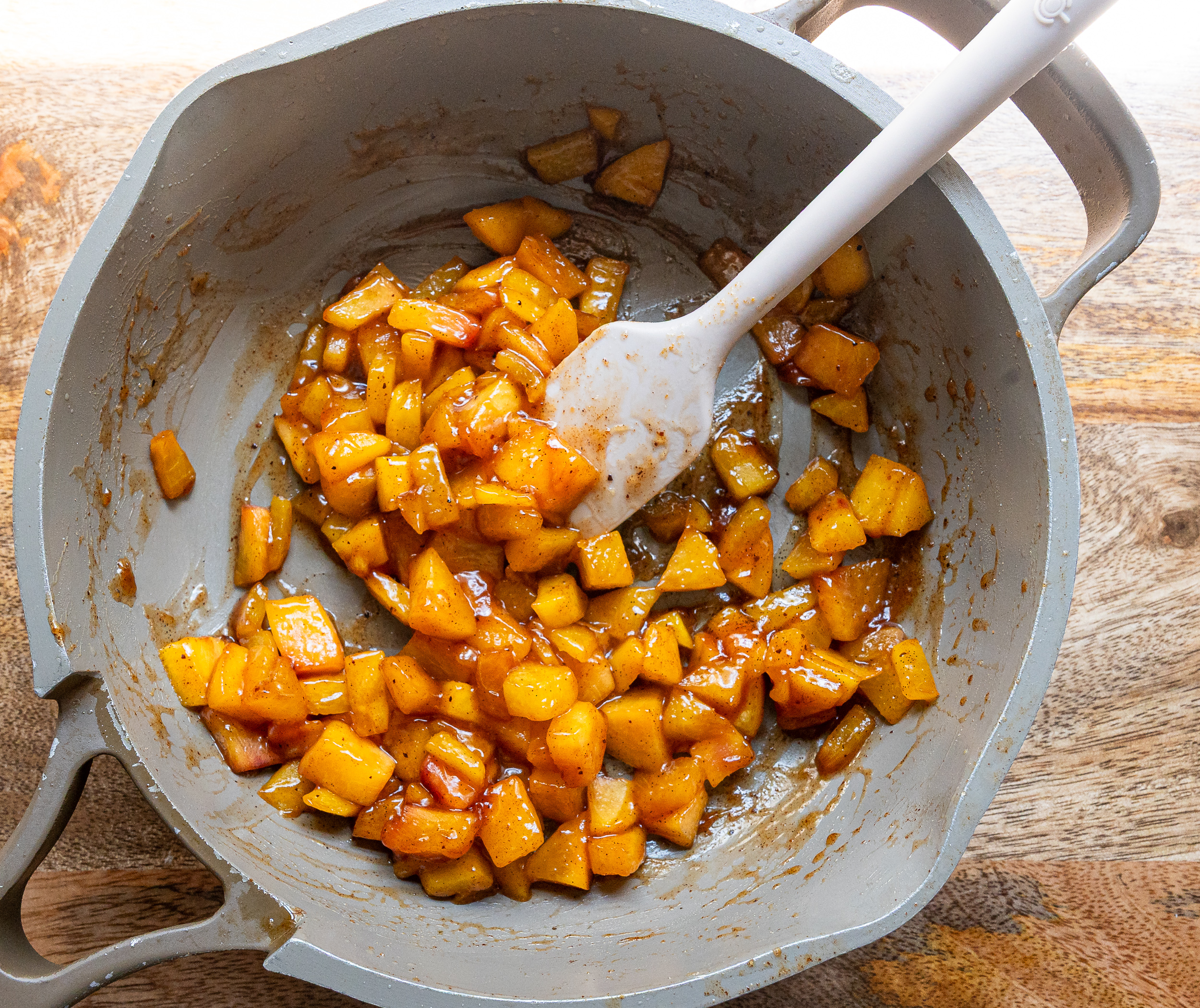
Add the diced peaches, brown sugar, granulated sugar, lemon juice, cinnamon, nutmeg, and salt to the same saucepan used to brown the butter. Cook over medium heat, stirring frequently, until the peaches soften and release their juices for 6-8 minutes. In a small bowl, stir together the cornstarch and cold water until smooth. Pour the slurry into the peach mixture. Continue cooking for approximately 1–2 minutes, stirring constantly, until the filling becomes very thick and glossy. The finished peach filling should resemble a chunky preserve. There should not be watery liquid pooling around the peaches. Remove the pan from the heat and stir in the vanilla extract.
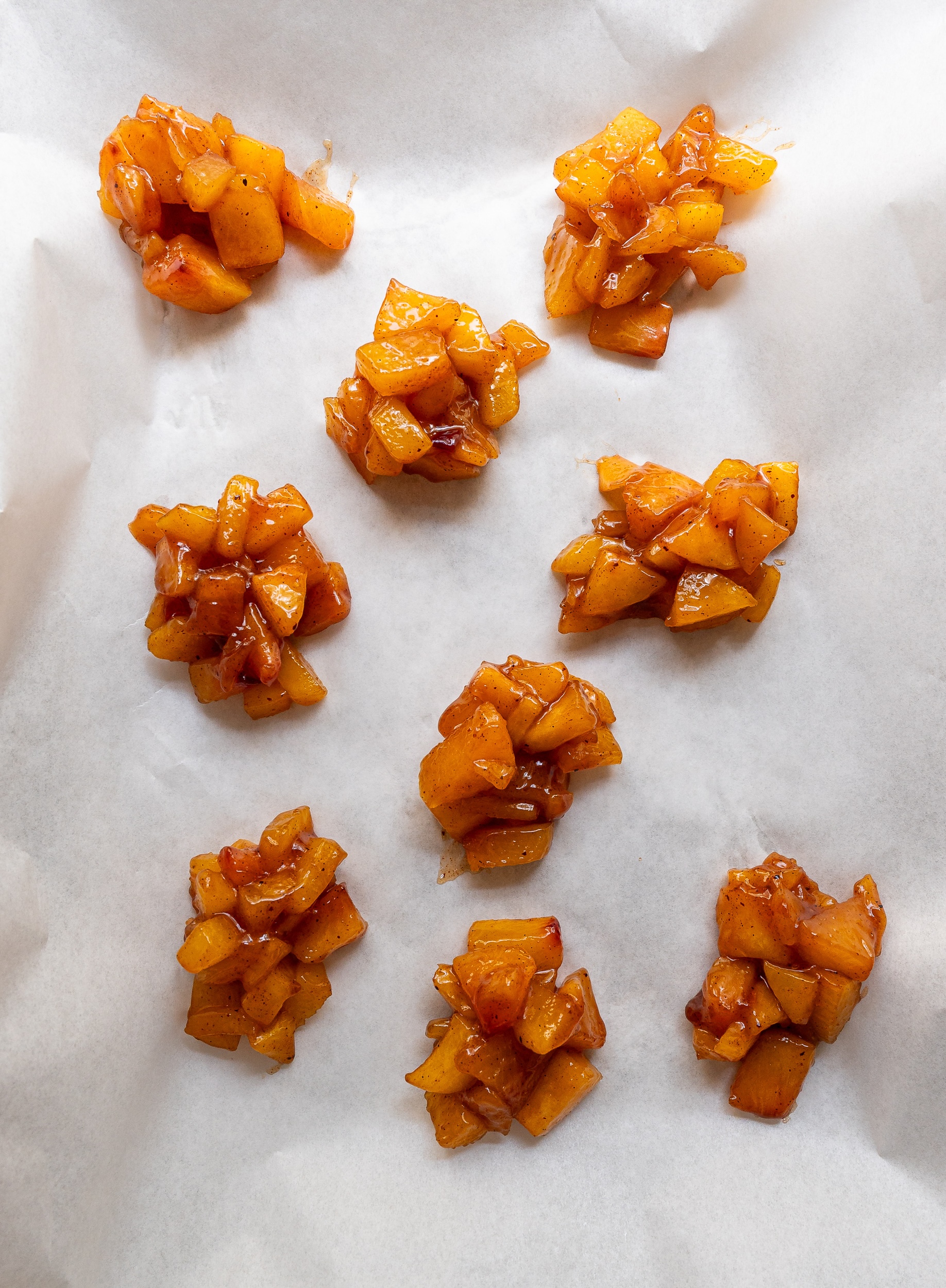
Line a small sheet pan or plate with parchment paper. Divide the peach filling into approximately 9 portions, using about 20–22g or 1 TBSP of filling for each cookie. Spoon the portions onto the parchment paper and place the pan in the freezer while you prepare the crumb topping and cookie dough. When ready to use the filling does not need to become completely solid. It should be cold and firm enough to lift from the parchment without running.
Add the softened butter, brown sugar, granulated sugar, flour, cinnamon, vanilla, and salt to a medium bowl. Use a fork or your fingertips to work the ingredients together until a crumbly mixture forms. This will take about 5 minutes of mixing. Set the crumble aside while preparing the cookie dough. If your kitchen is warm, place the crumble in the refrigerator so the butter remains cool.
Add the granulated sugar and brown sugar to the cooled brown butter. Whisk until the mixture is smooth, evenly combined, and no streaks of the individual ingredients remain. It will look like wet sand. Add the whole egg, egg yolk, and vanilla. Whisk until the mixture for at least 1 minute until it becomes smooth, glossy, and slightly thickened. In a separate bowl, whisk together the flour, cornstarch, baking powder, baking soda, salt, and cinnamon till fully combined. Add the dry ingredients to the brown butter mixture. Fold everything together with a rubber spatula just until a soft cookie dough forms and there are no streaks of flour. Do not overmix the dough.
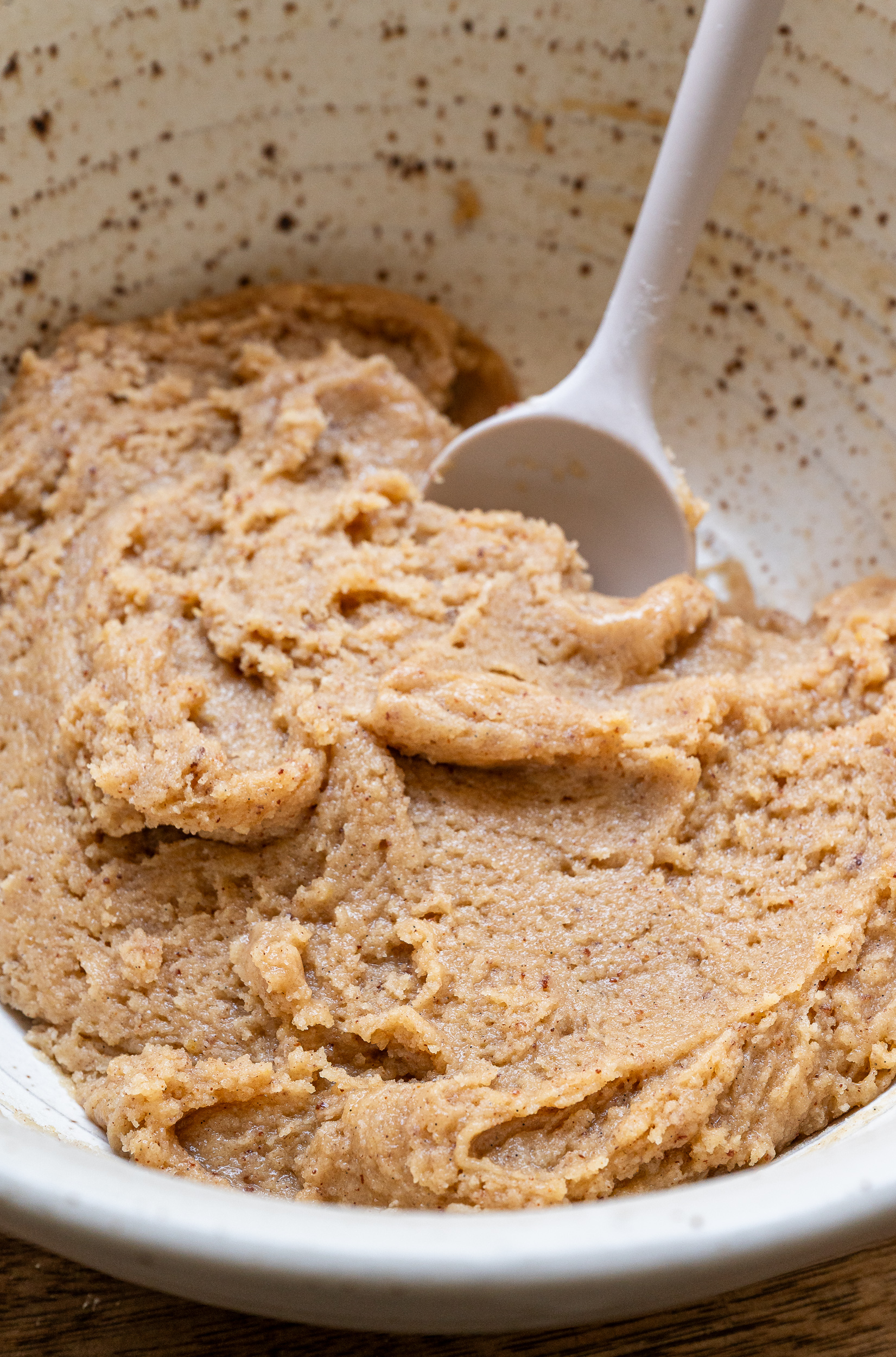
Divide the dough into approximately nine portions, using about 85g of dough per cookie. Working with one portion at a time, flatten the dough into a thick disk. Keep the center slightly thicker than the edges so the peach filling has a sturdy base.
Place one cold peach filling portion in the center of the flattened dough. Bring the edges of the dough up and around the filling. Carefully pinch the dough together until the filling is completely enclosed. Gently roll and shape the dough into a ball. Check the bottom and sides carefully. There should not be any peach filling visible through the dough. Any exposed filling can bubble out as the cookie bakes.
Make a small indentation in the top of each dough ball using your thumb or the back of a measuring spoon. Pack a generous amount of cinnamon crumb topping into the indentation and over the top of the cookie. Press the crumbs gently into the dough so they remain attached during baking. Avoid flattening the cookie.
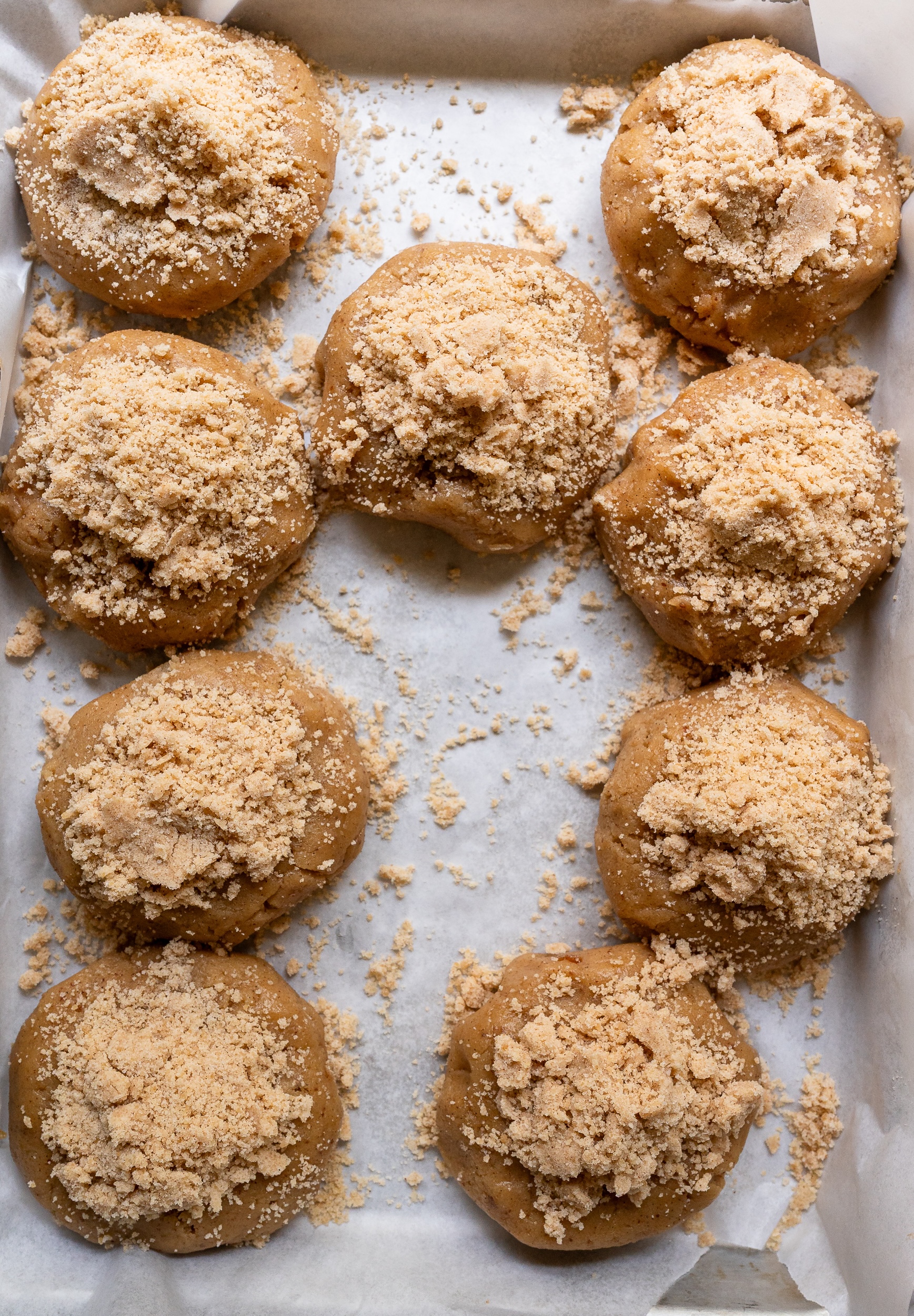
Arrange the finished dough balls on a parchment-lined baking sheet. Freeze the cookies for 1 hour. The cookies should be baked directly from the freezer. Do not allow them to thaw before baking. Freezing helps the cookies hold their shape and keeps the peach filling enclosed during the first several minutes in the oven.
Preheat the oven to 350°F. Line a large, light colored baking sheet with parchment paper. Place only three or four frozen cookie dough balls on the sheet at one time. Leave approximately 5 inches of space between each cookie because they will spread quite a bit. Bake directly from frozen for approximately 16–18 minutes. The cookies are ready when the edges look set and lightly golden. The centers may still look soft and slightly underbaked, but they should not appear wet or raw. The cookies will continue baking and setting on the hot pan after they leave the oven.
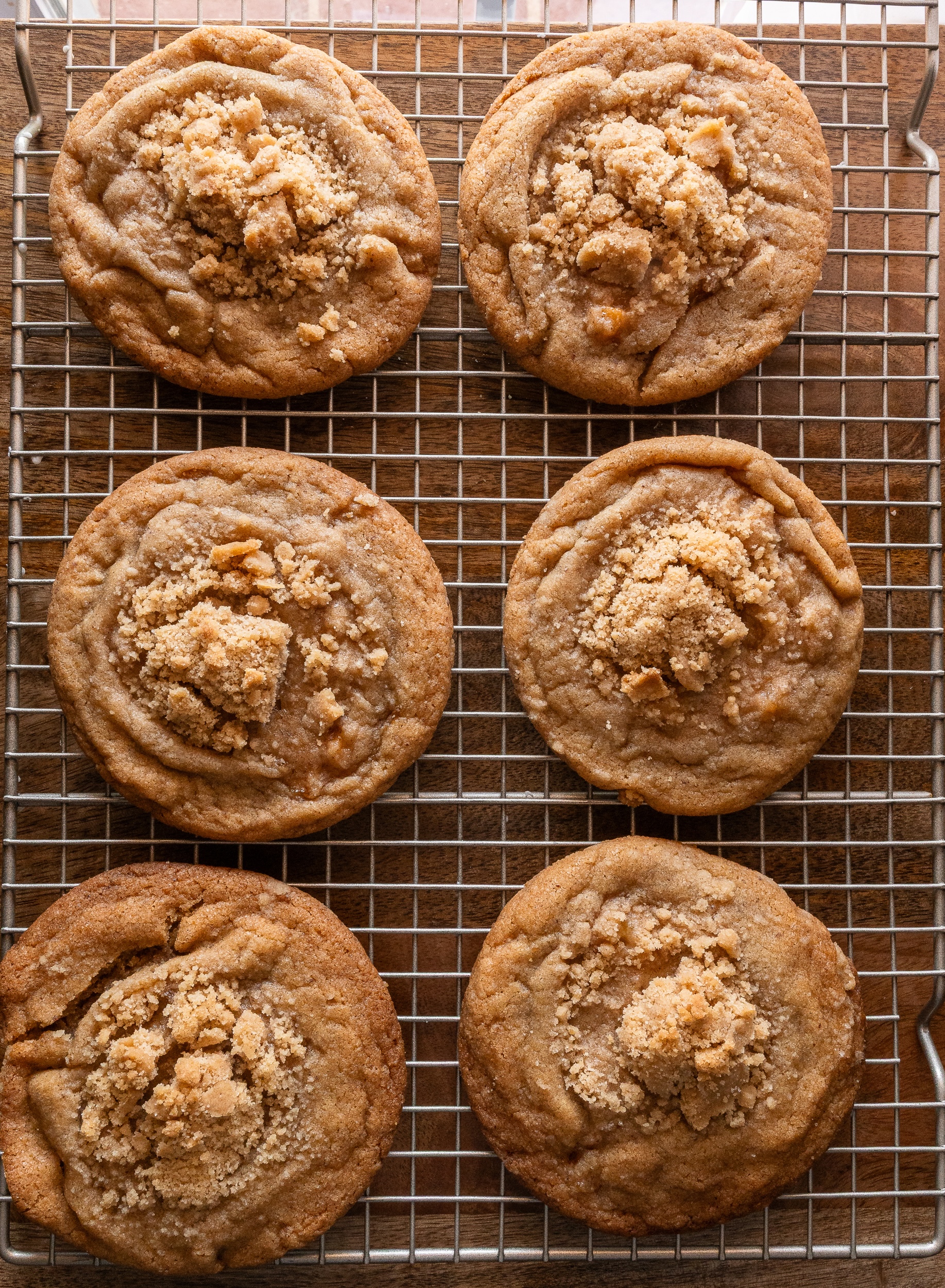
These cookies spread as they bake. Immediately after removing them from the oven, place a large round cookie cutter, bowl, or circular object around one cookie. Move the cutter in a gentle circular motion to push the irregular edges inward and create a rounder cookie. Repeat with the remaining cookies while they are still hot and pliable. This technique helps shape the cookie creating a slightly thicker, rounder cookie with a softer-looking center.
Allow the cookies to remain on the baking sheet for approximately 10 minutes. They are very soft when warm, and the peach filling needs time to settle. Moving the cookies too early may cause them to bend or break. After 10 minutes, carefully transfer them to a wire rack using a spatula. Let the cookies cool completely for at least 1 hour before adding the glaze. Glazing warm cookies will cause the icing to melt and disappear into the surface.
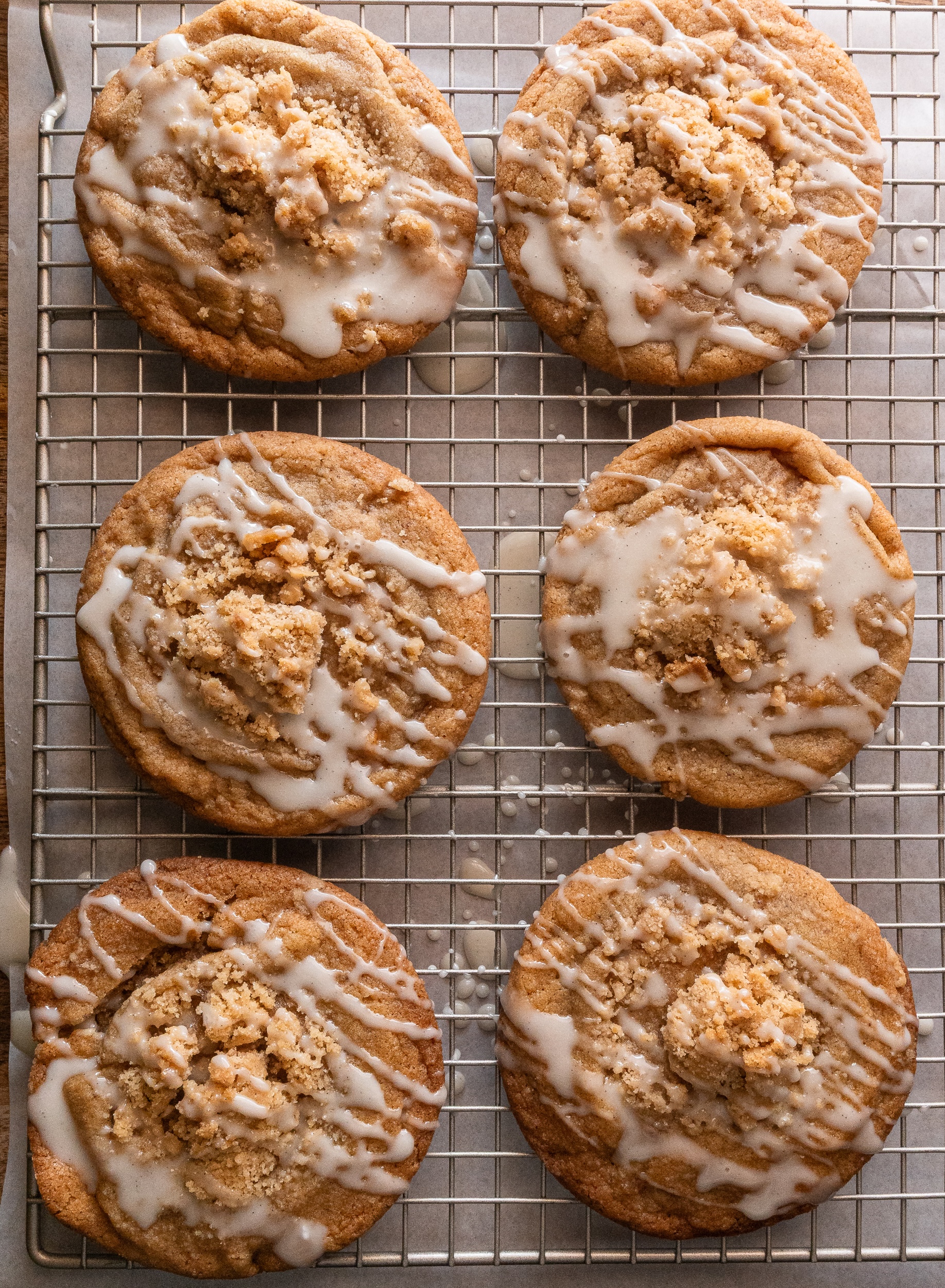
Whisk together the powdered sugar, milk, vanilla, and salt until smooth. Add a few drops of milk if the glaze is too thick. Add additional powdered sugar if it becomes too thin. Drizzle the glaze over the completely cooled cookies. Allow the glaze to set before serving or storing.
The peach mixture should be thicker than a traditional peach cobbler filling. Excess liquid can soak into the cookie dough and increase the chance of leaking. When you drag a spatula through the finished filling, the path should remain visible for a moment before slowly closing.
Fresh peaches vary in water content, so the finished amount of filling may differ slightly each time. Rather than relying only on tablespoon measurements, divide the cooked filling into nine equal portions. Aim for approximately 20–22g per cookie.
Although a dramatic peach center is tempting, too much filling can weaken the cookie walls.
Check the bottom, seam, and sides before adding the crumb topping. Even a small peach colored opening can become an escape route in the oven. Pinch any thin areas closed with a small piece of extra dough.
Do not thaw the cookies. Frozen dough spreads more slowly, giving the exterior time to set around the peach center.
These are large cookies and will spread substantially. Leave approximately 5 inches between each dough ball and avoid crowding the baking sheet.

Yes. Thaw the frozen peaches completely and drain off any excess liquid before weighing and dicing them. Frozen peaches may release more water than fresh peaches, so the filling may require a few additional minutes of cooking. Do not use the peaches while they are still frozen because the excess water can make the filling loose.
Canned peaches may also be used, but they must be drained thoroughly. Choose peaches packed in juice rather than heavy syrup when possible. Pat them dry before dicing and reduce the granulated sugar in the filling if the peaches are already very sweet. Cook the filling until it becomes thick and no loose syrup remains.
Yes! Assemble and freeze the unbaked cookie dough balls until firm. Once frozen, transfer them to an airtight freezer safe container with parchment paper between the layers. Freeze for up to 1 month.
Bake the cookies directly from frozen. Do not thaw them first. The baking time may need to be extended by 1–2 minutes when the dough has been frozen for several days.
These cookies are best stored in the refrigerator because they contain a moist fruit filling. Place the cooled and glazed cookies in a single layer inside an airtight container. If stacking is necessary, place parchment paper between the layers.
Refrigerate for up to 4 days. The cookies can remain at room temperature for several hours in a cool environment. Avoid leaving them in a hot kitchen, direct sunlight, or a warm vehicle. The peach filling and glaze will soften, and the cookies may become fragile.
These cookies are especially delicious chilled, my personal preference. It will firm up the peach center and gives the cookie a dense, chewy texture.
The baked cookies can be frozen, although the crumb topping will be slightly softer after thawing. For the best results, freeze the cookies before adding the glaze. Place the completely cooled cookies in an airtight freezer-safe container and freeze for up to 1 month.
Thaw the cookies in the refrigerator, then add the glaze once they have returned to a cool temperature.
These cookies are made with browned butter and contain a substantial amount of filling, so some spreading is expected. Make sure the assembled dough balls freeze for the full hour and go directly from the freezer to the oven. Also make sure that the oven is fully preheated before baking.
Brown butter loses water as it cooks, and the exact amount lost varies. If the dough will not hold together when pressed, add 1 teaspoon of milk and mix gently. Only add additional milk if absolutely necessary. Too much liquid can increase spreading.
The brown butter may have been too warm when the dough was mixed. Allow the dough to rest for 10–15 minutes before portioning. If it remains difficult to handle, refrigerate it briefly until it is scoopable but still pliable.
Yes. The glaze adds sweetness and gives the cookies a classic coffee cake finish, but the cookies will still be flavorful without it. A light dusting of powdered sugar can also be used.
You want a golden color, not burnt, like toasted hazelnut, not coffee ash.
Measuring flour properly makes a big difference in how your baked recipes turn out. For best results, use a kitchen scale and measure in grams. This ensures consistency and prevents adding too much flour, which can make this cake dry or dense.
If you don’t have a kitchen scale:
Too much flour is one of the most common reasons baked recipes can become dry and cakey
I’m so grateful you’re here! Have a look around at some of my favourite recipes and stay a while.
Get a fresh delivery of only the goods delivered to your inbox.


Leave a Comment
Did you make this recipe? I'd love to hear how it turned out. Leave a comment and share your tweaks.
-- / 5 average rating from -- reviews
Lorem ipsum dolor sit amet, consectetur adipiscing elit. Suspendisse varius enim in eros elementum tristique. Duis cursus, mi quis viverra ornare, eros dolor interdum nulla, ut commodo diam libero vitae erat. Aenean faucibus nibh et justo cursus id rutrum lorem imperdiet. Nunc ut sem vitae risus tristique posuere. uis cursus, mi quis viverra ornare, eros dolor interdum nulla, ut commodo diam libero vitae era
Lorem ipsum dolor sit amet, consectetur adipiscing elit. Suspendisse varius enim in eros elementum tristique. Duis cursus, mi quis viverra ornare, eros dolor interdum nulla, ut commodo diam libero vitae erat. Aenean faucibus nibh et justo cursus id rutrum lorem imperdiet. Nunc ut sem vitae risus tristique posuere. uis cursus, mi quis viverra ornare, eros dolor interdum nulla, ut commodo diam libero vitae era